
facebook
instagram
twitter
linkedin
X
europolitiche

Sign up now to

europolitiche3

Newsletter

europolitiche

Cross-media in Italian on the policies of European institutions and governments of European Union countries

Cross-media in Italian on the policies of European institutions and governments of European Union countries

Europolitiche lancia "Discovering the Balkans", il nuovo progetto finanziato Erasmus+Candidati nella redazione giovanile di Europolitiche all'Europa Project Week!Collina d'Europa: aiutaci a far crescere la nuova bibioteca / Help us build our new libraryThe Great Turning Point: Europe’s Electoral Map from 2026 to 2027Burnham's Blueprint: Resetting Britain’s National CourseIceland Puts the Brakes on Europe, but Its Cities Choose Pro-European PragmatismThe Kiev Summit and the Coalition of the Willing in Support of UkraineL'Europa in viaggio. Storia di ponti e di muri. Recensione del libro di Marco MagnoneA Conceptual Map of Current EU Enlargement ResearchWhy Adult Education Is Strategic for EuropeEmpowering Europe’s Youth: Demographic Shifts, Social Rights, and the Future of WorkThermal Stress and the Body Politic: Labor Protection, Social Cleavages, and the Future of European CitizenshipEU Social Pillar Toward 2030: AI, Cost of Living, and Job GuaranteesTaming the Algorithm: How the AI Act’s New Rules Test the Limits of European DemocracyJuly Flash Inflation Rises to 2.9% in the EurozoneThe Night of Ceuta and the Labyrinth of Borders: When Humanity Questions Spain and EUMigrant Inclusion: Erasmus+ Youth Seminar Held in StrasbourgMerz Eyes Fresh Impulsion for Government with Late-July ReshuffleThe New Burnham Government: A Political Analysis of "Place-Based" Social DemocracyEurozone Monetary Policy: ECB Freezes Rates Pending Fall Energy ImpactEurostat: Eurozone Inflation Moderates to 2.8% in June. Keeping the ECB in the SpotlightMacron and Merz: Realignment at the 26th Franco-German CouncilThe Ascent of Andy Burnham: From Manchester to Downing StreetThe Eurogroup presented its work programme through the first half of next yearEuropean Parliament Backs Digital Euro: 416 Votes in Favor Secure the Path to 2029 ImplementationThe Florence Report: Buti, Corsetti, Peychev Reconfiguring EU in a Fractured Global WorldThe Strategic Shift: Why the June 18th Declaration Redefines European Cultural PolicyVoices of Vision: Lessons from the Founders of EuropeThe Parliamentary Mandate as Compass: Embedding Expertise in European Strategic GovernanceThe NATO Alliance’s Shifting Center of Gravity: Perspectives on the Ankara SummitThe Custodian’s Mandate: Dublin’s Strategic Course for the UnionLa France, Paris et Emmanuel Grégoire: trois mois de mandat sous le signe de la continuité évolutiveInternational Erasmus+ Seminar in Tunisia: Building Partnerships for Stronger Youth ParticipationThe Digital Euro at a Crossroads: Assessing the ECON Committee’s Roadmap to 2029The Institutional Architecture of European Political Science: A Comparative Study
europolitiche

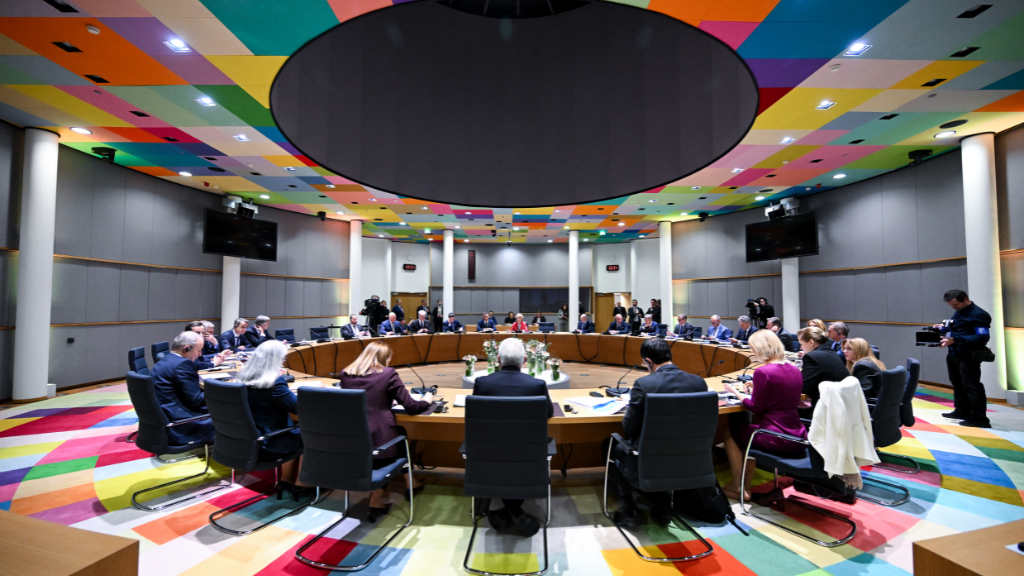
Informal meeting of the members of the European Council

24-01-2026 16:19

Europolitiche

Europolitiche, Macro/Scenari, consiglio-europeo-straordinario-del-22-gennaio-2026, the-january-22-summit-lasted-late-into-the-night-and-was-held-despite-trumps-reconsideration-announc, macron-e-sanchez, january-22-2026, groenlandia-e-danimarca, trump-a-davos, riuniti-i-27-leader-ue-il-22-gennaio-2026,

Informal meeting of the members of the European Council

Nella serata del 22 gennaio segnale politico di resilienza dei leader UE rispetto allo stress a cui sono stati sottoposti a Davos i rapporti transatlantici

EU/ENG - The extraordinary European Council on transatlantic relations was held on Thursday evening, convened at a time of heightened tension between the EU and the United States over the Greenland issue. The January 22 summit lasted late into the night and was held despite Trump's reconsideration announced at the Davos Forum regarding new tariffs imposed on several European countries that disagreed with a proposed US annexation of the Arctic Peninsula. The leaders' decision to forgo the Davos bilateral meetings in favor of a common position was seen as a sign of EU leaders' resilience in the face of the strain on relations with the White House at Davos. Summit participants agreed to strengthen European unity.

Among European leaders, French President Macron and Spanish Prime Minister Sánchez emphasized this week the need to strengthen European assertiveness in ongoing international dossiers. On the transatlantic front, Commission President Ursula von der Leyen mediated between the Council's differing positions, calling for the avoidance of, in her words, an "escalation" with Washington. However, von der Leyen reaffirmed several key points: "unequivocal solidarity with Greenland and Denmark"; support "for the six states threatened with tariffs"; and preparation of "trade countermeasures and non-tariff instruments" in the event that tariffs were applied to EU member states.
von-der-leyne-e-costa.webp

EU/ITA - Si è tenuto giovedi sera il Consiglio europeo straordinario sulle relazioni transatlantiche, convocato in un momento di forte tensione tra Ue e Stati Uniti legate alla questione groenlandese. Questo vertice del 22 gennaio si è protratto fino a tarda notte e si è svolto nonostante il ripensamento annunciato al Forum di Davos di Trump sui nuovi dazi a carico di diversi Paesi europei in dissenso con una ventilata annessione statunitense della penisola artica. La decisione dei leader di rinunciare ai bilaterali di Davos per privilegiare una posizione comune è stata letta come un segnale di resilienza dei leader UE rispetto allo stress a cui sono stati sottoposti a Davos i rapporti con la Casa Bianca. I partecipanti al vertice si sono ritrovati concordi nel rafforzare la compattezza europea.

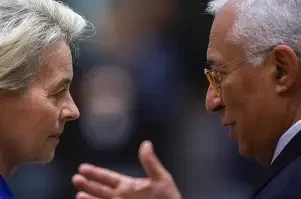
Tra i leader europei, il presidente francese Macron e il primo ministro spagnolo Sanchez hanno maggiormente insistito in settimana sul dare maggiore consistenza ad una assertività europea nei dossier internazionali aperti. Sul fronte dei rapporti transatlantici, la presidente della Commissione Ursula von der Leyen (nella foto in alto con il Presidente del Consiglio Ue Costa) ha mediato tra le diverse posizioni al Consiglio, richiamando a evitare, a suo dire, una “escalation” con Washington. La von der Leyen ha confermato però alcuni punti fermi: ”inequivocabile solidarietà a Groenlandia e Danimarca"; sostegno “ai sei Stati minacciati di dazi”; preparazione di “contromisure commerciali e strumenti non tariffari” nel caso in cui fossero applicati dazi a Paesi UE.


analisti associati @europolitiche.it*


This contribution is not a journalistic article but an analytical brief - Questo contributo non è un articolo giornalistico ma un brief analitico


facebook
instagram
twitter
linkedin
whatsapp
X

WEBSITE CREATED BY Q DIGITALY

©2021-2025 di Europolitiche.it