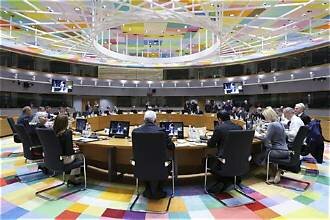



EU/ENG - Emmanuel Macron, at a press conference following the summit of the Coalition of the Willing on Thursday, September 4, reported on the developments regarding a "reassurance force" that had emerged during the meeting.
Within the framework of the 35-member European-dominated coalition, 26 countries discussed support for a post-hostility "reassurance force" already planned by their respective military leaders. This involves a commitment to be present "on the ground, at sea, or in the air," including at military bases near Ukraine.
The meeting was marked, in particular, by a final 1.5-hour telephone call with US President Trump. Among the many leaders who followed the conference remotely, decided at short notice, were the leaders of Germany, Italy, and the United Kingdom, who, along with Keir Starmer, coordinated the co-presidency of the session.
A change of direction is expected in Kiev regarding military aid, particularly to boost arms production in Ukraine: "We have the capacity to regenerate the Ukrainian army so that it can deter Russia." In this regard, London has instead announced an agreement between the Willing to supply "long-range missiles" to Kiev. Regarding the deployment of European troops as interposition forces in Ukraine, various positions within the Coalition have been confirmed, with Poland and Italy remaining notoriously opposed.
Alongside the head of the Elysée Palace, the special guest at the meeting, Ukrainian President Zelensky, thanked the United States for its "support," declaring that "pressure on Moscow is working." But at the same time, Kiev sees no desire in Russia to end the war. Indeed, Zelensky said of Putin that "he is using China's support as a blank check to continue the conflict."
After the meeting, a bilateral meeting was held between Zelensky and White House envoy Witkoff, although he was only present for part of the meeting.
Meanwhile, the White House chief expressed anger at the attitude of EU members like Hungary and Slovakia, who continue to buy Russian oil, demanding that this stop.
ITA - Emmanuel Macron in conferenza stampa dopo il vertice della coalizione dei Volenterosi di giovedi 4 settembre, ha riferito degli sviluppi riguardo una “forza di rassicurazione” maturati nel corso della riunione.
Nel quadro della coalizione dei 35 a dominante europea, 26 Paesi, hanno discusso del sostegno a una «forza di rassicurazione» post-ostilità già progettata dai rispettivi vertici militari. Si tratta dell’impegno ad essere presenti «sul campo, in mare o in aria», anche presso basi militari vicine all’Ucraina.
Un appuntamento segnato, in particolare, da un collegamento telefonico finale di un’ora e mezza. con il presidente americano Trump,
Fra i tanti leader che hanno seguito a distanza la conferenza, decisa con corto preavviso, i leader di Germania, Italia e Regno Unito, paese quest'ultimo che con Keir Starmer, ha coordinato la co-presidenza della sessione.
Previsto un cambio di marcia promesso a Kiev circa gli aiuti militari, soprattutto per potenziare la produzione di armi in Ucraina: «Abbiamo la capacità di rigenerare l’esercito ucraino affinché divenga capace di dissuadere la Russia». In proposito, Londra ha invece annunciato un accordo dei Volenterosi per fornire «missili a lungo raggio» a Kiev. Sullo schieramento di truppe di Paesi europei come forze di interposizione in Ucraina, si sono registrate conferme delle varie posizioni nella Coalizione, notoriamente avversi restano Polonia ed Italia.
Al fianco del capo dell’Eliseo, l’invitato speciale della riunione, il presidente ucraino Zelensky, ha ringraziato gli Stati Uniti per il «sostegno», dichiarando che «la pressione su Mosca funziona». Ma al contempo, Kiev non scorge in Russia «nessuna volontà di mettere fine alla guerra». Anzi, Zelensky ha detto su Putin che «usa il sostegno della Cina come un assegno in bianco per proseguire il conflitto».
Dopo la riunione, si è tenuto un bilaterale fra Zelensky e l’inviato della Casa Bianca Witkoff, pur presente solo a una parte della riunione.
Intanto il capo della Casa Bianca si è adirato per l’atteggiamento di membri Ue come Ungheria e Slovacchia che comprano ancora petrolio russo, esigendo che ciò cessi.
Analisti associati a Parigi @europolitiche.it *
* This contribution is not a journalistic article but an analytical brief - Questo contributo non è un articolo giornalistico ma un brief analitico