



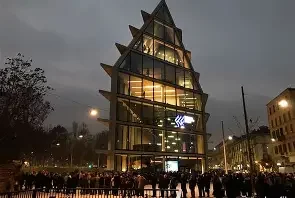

EU/ENG - In the immediate aftermath of the formal closure of the Conference on the Future of Europe in Strasbourg, and against a bleak geopolitical backdrop where land warfare has returned to the continent's eastern borders and the pandemic’s long shadow forces a radical reassessment of public health governance, European political thought has taken a decisive leap forward. Yesterday’s launch of Il Manifesto del Futuro Europeo (The Manifesto of the European Future) by the Fondazione Giangiacomo Feltrinelli offers a compelling antidote to the current institutional malaise. Far from a technocratic white paper conceived within the sterile corridors of Brussels, this text represents the intellectual distillation of the Feltrinelli Camps—a transnational crucible of young social scientists, activists, and policymakers determined to rescue the European project from the twin perils of populist Euroscepticism and bloodless eurocracy.
The Legitimacy Crisis: When Technocracy Eviscerates the Polis
From a political science perspective, the Manifesto strikes at the heart of the debate surrounding the European Union’s democratic deficit, specifically addressing the fraying of both its input legitimacy (citizen-driven, bottom-up participation) and output legitimacy (the policy efficacy and performance of its institutions).
For decades, European integration advanced under the umbrella of a "permissive consensus"—an era when citizens passively deferred to diplomatic elites so long as the single market guaranteed peace and structural prosperity. However, the polycrises of the past fifteen years, spanning from the austerity of the sovereign debt crisis to the fractured management of migratory flows, have shattered that compact. The document released yesterday maps this precise fault line. Its core thesis argues that the crisis of European democracy stems not from an excess of ideological conflict, but from the systemic evacuation of the political sphere. When foundational macroeconomic choices are insulated from parliamentary debate and hardcoded into inflexible fiscal rules, the polis suffocates. In this analytical framework, populism emerges not as the root disease, but as the morbid symptom of a democratic architecture that has ceased to offer meaningful policy alternatives.
Spatial Justice: A Transnational Welfare State to Counter the "Geographies of Discontent"
How should the EU respond to this democratic retreat? The Manifesto anchors its prescriptive framework onto two core pillars of contemporary political economy: spatial justice and transnational social protection.
Sociodemographic data generated by the Foundation’s research networks reveal an EU fractured not along traditional North-Sud or East-West divides, but along a sharp cleavage separating hyper-connected urban hubs from existential peripheries. In globalized metropolises, capital accumulates, the green transition is embraced as an economic boon, and European identity is a lived reality. Conversely, in deindustrialized rustbelts, rural hinterlands, and neglected suburbs, environmental regulations are experienced as regressive taxation and Brussels is viewed as a hostile external constraint. It is within these "geographies of discontent" that democracy undergoes backsliding.
To reverse this trend, the Manifesto advocates for a Copernican revolution in EU governance: the European Pillar of Social Rights must become the structural precondition for the ecological and digital transitions, rather than a mere retrospective safety net. The policy recommendations articulated in the text explicitly demand:
A robust European regulatory framework governing algorithmic management and platform labor, ensuring the gig economy does not institutionalize a new, disenfranchised transnational precariat.
The institutionalization of permanent, common investment mechanisms—building on the precedent of the NextGenerationEU framework—to structurally fund a Just Transition capable of shielding workers in carbon-intensive industries during economic restructuring.
Beyond the Nation-State: Institutionalizing Deliberative Democracy
The volume’s most methodologically innovative contribution lies in its reimagining of political representation. Rejecting a nostalgic return to the mid-century model of mass political parties, the Manifesto looks ahead by experimenting with the paradigms of deliberative and participatory democracy.
The Feltrinelli Camps themselves serve as a microcosm of an alternative European public sphere: transnational, deliberative arenas where individuals engage not merely as passive voters every five years, but as active co-designers of public policy. The text strongly recommends the permanent institutionalization of European Citizens' Assemblies—drawing on the successful constitutional conventions pioneered in Ireland—to complement traditional representative bodies like the European Parliament. This envisions a model of active European citizenship rooted not in shared nationality, but in shared socio-economic destinies and reciprocal institutional protections.
A New Horizon for Contemporary Europe
As this volume enters the public square, its theoretical scope extends far beyond the Italian domestic debate. It avoids both the pitfalls of abstract federalist utopianism and the cynical stasis of intergovernmental realism.
Instead, it bequeaths a clear conceptual legacy to the Union of tomorrow: the European project can only survive its disintegrative impulses if it possesses the courage to transition from a community of market rules and fiscal constraints into a genuine community of shared destiny and social protection. European democracy, the Manifesto reminds us, cannot be defended by erecting normative fortresses; it requires expanding the horizon of social rights to ensure that the monumental transitions of our century—ecological, digital, and demographic—leave no one behind.

EU/ITA - Dopo la chiusura formale dei lavori della Conferenza sul Futuro dell'Europa a Strasburgo, mentre le cancellerie continentali faticano a metabolizzare il ritorno della guerra ai confini orientali e l'onda lunga della pandemia ridisegna i confini del welfare, la riflessione politica europeista ha la possibilità di compie un passo in avanti. Mette in campo questa prospettiva, la Fondazione Giangiacomo Feltrinelli che ha ufficialmente presentato Il Manifesto del Futuro Europeo.
Non siamo di fronte all'ennesimo white paper burocratico concepito nei corridoi di Bruxelles, ma al distillato politico dei Feltrinelli Camp: un laboratorio transnazionale che si candida a fare una urgente operazione intellettuale: sottrarre il domani dell'Unione sia alla retorica paralizzante degli euroscettici, sia al tecnicismo algido degli eurocrati.
La Crisi di Legittimità: Se la Tecnocrazia Svuota la Polis
Dal punto di vista politologico, il Manifesto si inserisce direttamente nel cuore del dibattito sulla duplice crisi di legittimità dell'Unione Europea: quella che i teorici della politica definiscono input legitimacy (la democrazia dal basso, il peso del voto dei cittadini) e output legitimacy (la capacità delle istituzioni di produrre risultati efficaci).
Per decenni, l'integrazione europea ha viaggiato sul binario del cosiddetto "consenso permissivo": i cittadini lasciavano fare alle élite diplomatiche, purché il mercato unico garantisse pace e benessere. Ma le crisi polimorfe degli ultimi quindici anni – dall'austerità della crisi del debito alla gestione dei flussi migratori – hanno spezzato questo incantesimo. Il documento presentato ieri fotografa esattamente questa faglia. La tesi profonda che attraversa le sue pagine è che la democrazia europea non sia entrata in crisi per "eccesso di ideologia", ma per svuotamento della politica. Quando le decisioni macroeconomiche fondamentali vengono sottratte al dibattito parlamentare e relegate a vincoli di bilancio considerati inflessibili, la polis si spegne. Il populismo, in quest'ottica, non è la causa del male, ma il sintomo morboso di una democrazia che ha smesso di offrire alternative reali.
La Proposta: Un Welfare Transnazionale contro le "Geografie della Rabbia"
Come si risponde a questa ritirata della democrazia? La risposta del Manifesto si articola su due assi politologici fondamentali: la giustizia spaziale e il welfare transnazionale.
I dati demografici e sociologici emersi dai tavoli di ricerca della Fondazione mostrano che l'Europa è spaccata in due non tanto tra Nord e Sud o tra Est e Ovest, ma tra centri urbani iper-connessi e periferie esistenziali. Nelle metropoli globalizzate si concentra il capitale, la transizione ecologica è un'opportunità e l'europeismo è un dato di fatto; nelle aree interne, nelle ex regioni industriali e nelle periferie degradate, la transizione verde viene percepita come una tassa e l'Europa come un vincolo ostile. È in queste "geografie della rabbia" che la democrazia arretra.
Il Manifesto propone una vera e propria rivoluzione copernicana: il pilastro sociale europeo deve diventare la precondizione della transizione ecologica e digitale, non il suo ammortizzatore a posteriori. Le raccomandazioni di policy avanzate nel testo chiedono a gran voce:
Una governance europea del lavoro algoritmico e delle piattaforme, per evitare che la gig economy crei una nuova classe di sub-proletariato transnazionale privo di diritti.
Meccanismi di mutuo soccorso e investimenti comuni (sulla scia del NextGenerationEU) che non siano straordinari, ma strutturali, per finanziare una "Just Transition" (una transizione giusta) capace di proteggere i lavoratori delle industrie fossili in riconversione.
Oltre lo Stato-Nazione: La Pratica della Democrazia Deliberativa
L'aspecto metodologicamente più avanzato del volume riguarda la teoria della rappresentanza. Di fronte al declino dei partiti di massa tradizionali, il Manifesto non evoca nostalgicamente il passato, ma sperimenta il futuro attraverso la democrazia deliberativa e partecipativa.
I Feltrinelli Camp sono stati essi stessi un modello di ciò che l'Europa potrebbe diventare: arene pubbliche transnazionali in cui il cittadino non è un mero elettore passivo ogni cinque anni, ma un co-progettista delle politiche pubbliche. Il testo suggerisce di istituzionalizzare le Assemblee dei Cittadini (sulla scorta degli esperimenti riusciti in Irlanda sulla riforma costituzionale), affiancandole alle istituzioni rappresentative classiche come il Parlamento Europeo. È l'idea di una cittadinanza attiva europea che si esercita non sulla base dell'appartenenza nazionale, ma sulla condivisione di destini e di tutele sociali.
Un Orizzonte per l'Europa di Domani
Nel momento in cui questo volume entra nel dibattito pubblico, rivela una caratura internazionale che scavalca i confini italiani e lascia un'eredità teorica chiarissima all'Unione che verrà: l'Europa si salverà dalle sue pulsioni autodistruttive solo se avrà il coraggio di trasformarsi da una comunità di regole e di mercati a una comunità di destino e di protezione sociale. La democrazia europea, suggerisce il Manifesto, non si difende erigendo muri normativi, ma espandendo lo spazio dei diritti e garantendo che le grandi transizioni del nostro secolo – climatica, digitale, demografica – non lascino indietro nessuno.
Antonio De Chiara @europolitiche.it
This text is a think tank note and is not a journalistic article - Questo testo è una nota del think tank* e non è un articolo giornalistico