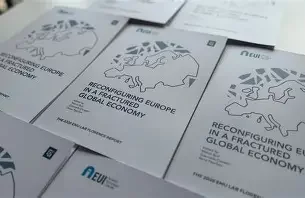




EU/ENG -Throughout this month of May, the scholarly community and policy circles alike have directed significant attention toward a groundbreaking essay titled “How Sustainable Innovation Will Reshape the Future,” co-authored by the prominent economists and strategists Lucrezia Reichlin, Rajesh Chandy, and Ioannis Ioannou.
Rather than a conventional academic paper, this work stands out as a brilliant, forward-looking scenario analysis. It was directly commissioned and published by the London Business School (LBS) within the framework of its institutional research publications and internal think tanks—specifically under the aegis of the university’s specialized research centers, where Lucrezia Reichlin and Rajesh Chandy serve as Full Professors and Ioannis Ioannou holds the position of Associate Professor.
Conceived from its inception as an authoritative Executive and Policy Paper, the document is strategically tailored for an audience of institutional investors, market regulators, and global policymakers, rather than the narrow confines of pure academia. In this economic landscape, the piece functions as a true "programmatic manifesto," delineating the profound structural impact that sustainability is poised to exert across advanced markets.
This intended audience explains the text's unique, multidisciplinary architecture. Far from being a purely econometric paper—a methodology that would have fallen under the sole purview of Reichlin’s traditional expertise—this essay achieves a powerful synthesis. It seamlessly bridges Reichlin’s rigorous macro-structural economic models with the cutting-edge innovation and corporate strategies championed by Chandy and Ioannou. The result is a holistic framework capable of translating long-term environmental imperatives into immediate, actionable market dynamics.
EU/ITA - In questo mese di maggio, la comunità scientifica e i circoli di policy hanno rivolto significativa attenzione a un saggio d'avanguardia intitolato “How Sustainable Innovation Will Reshape the Future” (Come l'innovazione sostenibile riscriverà il futuro), co-firmato dall'economista Lucrezia Reichlin (nella foto di copertina) e dai due professori di strategia aziendale Rajesh Chandy e Ioannis Ioannou.
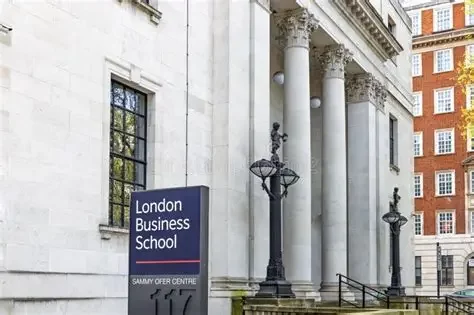
Più che un convenzionale articolo accademico, questo lavoro si configura come una brillante e lungimirante analisi di scenario. Il saggio è stato direttamente commissionato e pubblicato dalla London Business School (LBS) (nella foto in alto) nell'ambito delle proprie pubblicazioni di ricerca istituzionale e dei suoi think tank interni — nello specifico sotto l'egida dei centri di ricerca specializzati dell'ateneo, dove Lucrezia Reichlin e Rajesh Chandy ricoprono la cattedra di professori ordinari e Ioannis Ioannou la posizione di professore associato.
Concepito fin dal principio come un autorevole Executive and Policy Paper, il documento è strategicamente calibrato per un pubblico di investitori istituzionali, regolatori dei mercati e decisori politici globali, superando i confini ristretti della pura accademia. In questo panorama economico, l'opera funge da vero e proprio "manifesto programmatico", delineando il profondo impatto strutturale che la sostenibilità si appresta a esercitare sui mercati avanzati.
Questa destinazione d'uso spiega l'architettura unica e multidisciplinare del testo. Lungi dall'essere un paper puramente econometrico — metodologia che sarebbe rientrata nella sola sfera di competenza della Reichlin —, questo saggio realizza una potente sintesi: unisce senza soluzione di continuità i rigorosi modelli macro-strutturali ed economici della Reichlin con le strategie aziendali e di innovazione d'avanguardia promosse da Chandy e Ioannou. Il risultato è un quadro olistico capace di tradurre gli imperativi ambientali a lungo termine in dinamiche di mercato immediate e azionabili.
Antonio De Chiara @europolitiche.it*
This text is a think tank note and is not a journalistic article - Questo testo è una nota del think tank* e non è un articolo giornalistico