
facebook
instagram
twitter
linkedin
X
europolitiche

Sign up now to

europolitiche3

Newsletter

europolitiche

Cross-media in Italian on the policies of European institutions and governments of European Union countries

Cross-media in Italian on the policies of European institutions and governments of European Union countries

Ecco la Redazione Giovanile di Europolitiche all'Europa Project Week 2026!Europolitiche lancia "Discovering the Balkans", il nuovo progetto finanziato Erasmus+Collina d'Europa: aiutaci a far crescere la nuova biblioteca / Help us build our new libraryEurogroup's Balancing Act: Unity, Realism, and the October AgendaLa voix des bancs: la France et la redécouverte d'une communauté dans la rueL'Europa non si aspetta, si progetta: al via a Roma la prima edizione del Festival della ProgettazioneSpain at a Crossroads: Sánchez Re-engages and Calls Snap Elections for November 29The Architecture of Euro Debt: The Expert Debate on a European Safe AssetEurope at the UN General Assembly: Priorities, Debates, and Leadership ResponsesBerlin's Left Turn and AfD's Political Isolation: Germany's September VoteDublin Summit: Eurogroup and Ecofin Chart the CourseUrsula von der Leyen and the State of the UnionVon der Leyen’s 2026 SOTEU Between Strategic Sovereignty and Social CohesionThe Parliament on a Razor's Edge: Sweden Chooses a Cautious TurnSovereignty and Growth: Driving Europe's Green Transition in Global GeopoliticsECB Rate Hike on September 10 Despite RisksMille giorni per rifare l’Europa: alla Sapienza nasce la sfida del nuovo processo costituenteBelgrade and the European Path: Reflections Following the Burial of Ratko MladićThe Shadow of Eastern Discontent and the Resilience of German Democratic ArchitectureThe Great Turning Point: Europe’s Electoral Map from 2026 to 2027EU Growth Momentum and Moderate Convergence in the Q2 2026 ExpansionBurnham's Blueprint: Resetting Britain’s National CourseGeopolitics, Power, and European Integration: Analyzing Mario Draghi's New BookIceland Puts the Brakes on Europe, but Its Cities Choose Pro-European PragmatismThe Kiev Summit and the Coalition of the Willing in Support of UkraineThe Rhine Group: Mario Draghi’s new vector for European policy executionL'Europa in viaggio. Storia di ponti e di muri. Recensione del libro di Marco MagnoneA Conceptual Map of Current EU Enlargement ResearchWhy Adult Education Is Strategic for EuropeEmpowering Europe’s Youth: Demographic Shifts, Social Rights, and the Future of WorkThermal Stress and the Body Politic: Labor Protection, Social Cleavages, and the Future of European CitizenshipEU Social Pillar Toward 2030: AI, Cost of Living, and Job GuaranteesTaming the Algorithm: How the AI Act’s New Rules Test the Limits of European DemocracyJuly Flash Inflation Rises to 2.9% in the EurozoneThe Night of Ceuta and the Labyrinth of Borders: When Humanity Questions Spain and EU
europolitiche

Olof Palme's legacy, 40 years after his assassination

28-02-2026 17:29

Europolitiche

Europolitiche, Cultura politica, olof-palme, da-quel-28-febbraio-1986-di-palme-si-continua-a-discutere-perche-le-sue-idee-hanno-arricchito-la-cul, europolitiche-ricorda-olof-palme-, antonio-de-chiara-scrive-su-olof-palme, olof-palme-was-murdered-on-february-28-1986-palmes-life-was-cut-short-at-the-age-of-just-fifty-nine-, socialdemocrazia-europea, olof-palme-e-la-cultura-politica-europea,

Olof Palme's legacy, 40 years after his assassination

Da quel 28 febbraio 1986, di Palme si continua a discutere perché le sue idee hanno arricchito la cultura politica europea

EU/ENG - Olof Palme was murdered on February 28, 1986. Palme's life was cut short at the age of just fifty-nine, but the circumstances, motive, and killer remain shrouded in mystery. His death had a significant impact on Sweden and has sparked many theories and discussions about his life and politics. Throughout his political career, Palme played a significant role as leader of the Social Democrats and had a profound influence on international politics and Swedish society. He was chairman of the Social Democratic Party from 1969 to 1986, a minister several times, Prime Minister (Minister of State) of Sweden from October 14, 1969, to October 8, 1976, a member of Parliament from 1976 to 1982, and then Prime Minister again from October 8, 1982, until the day of his assassination. Pragmatic and courageous, Palme led a risky international political life, opposing the Vietnam War, South African apartheid, and Franco's Spain. Sensitive to Third World causes and a proponent of "active neutralism" capable of gaining a hearing in East and West, North and South, Olof Palme was one of the most advanced reformers and innovators of post-World War II social democracy. Forty years later, the figure and political legacy of the Swedish Prime Minister, assassinated in Stockholm on the night of February 28, 1986, are more relevant and present than ever, and he continues to be debated because his ideas have shaped contemporary European history.
palme_place_of_death.jpeg

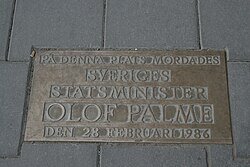
EU/ITA - L'allora primo ministro della Svezia Olof Palme fu assassinato, a cinquantanove anni, il 28 febbraio 1986. La regia, il movente e il killer dell’omicidio sono tuttora avvolti dal mistero. La sua morte (nella foto in alto la targa commemorativa di Palme posta presso il luogo dove fu assassinato) emozionò il mondo intero e ha avuto un impatto significativo sulla Svezia. Durante la sua vita politica, Palme ha avuto un ruolo di primo piano come leader dei Socialdemocratici che guidò dal 1969 al 1986. Diverse volte ministro, primo ministro (ministro di Stato) della Svezia dal 14 ottobre 1969 all'8 ottobre 1976, membro del parlamento dal 1976 al 1982 e poi di nuovo premier dall'8 ottobre 1982 fino al giorno del suo assassinio. Pragmatico e coraggioso, Palme condusse una vita politica rischiosa in chiave internazionale, opponendosi alla guerra del Vietnam, all'apartheid sudafricano, alla Spagna franchista. Sensibile alle cause del Terzo mondo, fautore del “neutralismo attivo” capace di farsi ascoltare a Est e a Ovest come a Nord e a Sud, Palme é stato uno dei riformatori più avanzati e rinnovatori della socialdemocrazia del secondo dopoguerra. Quaranta anni dopo, la figura e l’eredità politica del Primo ministro svedese assassinato a Stoccolma la notte del 28 febbraio 1986, sono più attuali e presenti che mai e di lui si continua a discutere perché le sue idee hanno segnato la storia contemporanea europea.


Antonio De Chiara @europolitiche.it*


* This contribution is not a journalistic article but an analytical brief - Questo contributo non è un articolo giornalistico ma un brief analitico
facebook
instagram
twitter
linkedin
whatsapp
X

WEBSITE CREATED BY Q DIGITALY

©2021-2025 di Europolitiche.it