
facebook
instagram
twitter
linkedin
X
europolitiche

Sign up now to

europolitiche3

Newsletter

europolitiche

Cross-media in Italian on the policies of European institutions and governments of European Union countries

Cross-media in Italian on the policies of European institutions and governments of European Union countries

Ecco la Redazione Giovanile di Europolitiche all'Europa Project Week 2026!Europolitiche lancia "Discovering the Balkans", il nuovo progetto finanziato Erasmus+Collina d'Europa: aiutaci a far crescere la nuova biblioteca / Help us build our new libraryEurogroup's Balancing Act: Unity, Realism, and the October AgendaLa voix des bancs: la France et la redécouverte d'une communauté dans la rueL'Europa non si aspetta, si progetta: al via a Roma la prima edizione del Festival della ProgettazioneSpain at a Crossroads: Sánchez Re-engages and Calls Snap Elections for November 29The Architecture of Euro Debt: The Expert Debate on a European Safe AssetEurope at the UN General Assembly: Priorities, Debates, and Leadership ResponsesBerlin's Left Turn and AfD's Political Isolation: Germany's September VoteDublin Summit: Eurogroup and Ecofin Chart the CourseUrsula von der Leyen and the State of the UnionVon der Leyen’s 2026 SOTEU Between Strategic Sovereignty and Social CohesionThe Parliament on a Razor's Edge: Sweden Chooses a Cautious TurnSovereignty and Growth: Driving Europe's Green Transition in Global GeopoliticsECB Rate Hike on September 10 Despite RisksMille giorni per rifare l’Europa: alla Sapienza nasce la sfida del nuovo processo costituenteBelgrade and the European Path: Reflections Following the Burial of Ratko MladićThe Shadow of Eastern Discontent and the Resilience of German Democratic ArchitectureThe Great Turning Point: Europe’s Electoral Map from 2026 to 2027EU Growth Momentum and Moderate Convergence in the Q2 2026 ExpansionBurnham's Blueprint: Resetting Britain’s National CourseGeopolitics, Power, and European Integration: Analyzing Mario Draghi's New BookIceland Puts the Brakes on Europe, but Its Cities Choose Pro-European PragmatismThe Kiev Summit and the Coalition of the Willing in Support of UkraineThe Rhine Group: Mario Draghi’s new vector for European policy executionL'Europa in viaggio. Storia di ponti e di muri. Recensione del libro di Marco MagnoneA Conceptual Map of Current EU Enlargement ResearchWhy Adult Education Is Strategic for EuropeEmpowering Europe’s Youth: Demographic Shifts, Social Rights, and the Future of WorkThermal Stress and the Body Politic: Labor Protection, Social Cleavages, and the Future of European CitizenshipEU Social Pillar Toward 2030: AI, Cost of Living, and Job GuaranteesTaming the Algorithm: How the AI Act’s New Rules Test the Limits of European DemocracyJuly Flash Inflation Rises to 2.9% in the EurozoneThe Night of Ceuta and the Labyrinth of Borders: When Humanity Questions Spain and EU
europolitiche

The Conference on Ukraine in Paris

27-02-2024 17:32

Europolitiche

Europolitiche, Macro/Scenari, emmanuel-macron, guerra-russo-ucraina, sostegno-europeo-a-kiev, conferenza-di-parigi,

The Conference on Ukraine in Paris

Firm opposition from countries such as the United States, Germany and also Italy, as well as that of NATO Secretary General Stoltenberg.

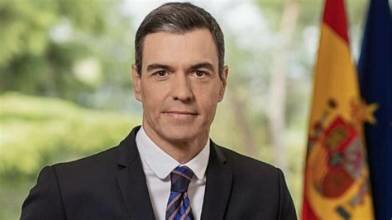
Two years after the Russian invasion of Ukraine, French President Macron brought together over twenty Western leaders at a conference of allied countries for support for Ukraine on Monday 27 February at the Elysée Palace.Among the participants in the conference in Paris were German Chancellor Scholz, Spanish Prime Minister Sanchez, British Foreign Minister Cameron, representatives of Canada, Poland and the United States and, for Italy, the Deputy Foreign Minister.In front of more than twenty heads of state and government, the President of the French Republic underlined that "today the security of all of us is at stake. We have seen, especially in recent months, a worsening of Russia", also manifested in the death of Kremlin opponent Alexei Navalny.“We are undoubtedly in a moment where a relaunch is needed from everyone,” Macron said, adding that this implies strong decisions to do more to support Kiev against Russia.From Kiev, Ukrainian President Zelensky participated in the video link of the conference and expressed gratitude for the European Union but wanted to underline with the same allies gathered in Paris that "of the millions of bullets that the European Union has promised us, unfortunately It wasn't 50 percent that arrived, but 30." Zelensky recalled the victory against Russia depends on the West.


Macron: I don't rule out the possibility of sending Western troops to support KievIn reaffirming France's commitment to Kiev, at the end of the conference in Paris, Macron went so far as to declare in a press conference: "Today there is no consensus on the sending of ground troops in an official, obvious and approved way . But nothing can be ruled out in the dynamics. We will do everything necessary so that Russia cannot win this war."Sending Western troops on the ground in Ukraine should not "be ruled out" despite there being no consensus on the possibility at this stage: Reactions to the hypothesis of sending Western troopsThe hypothesis of sending troops finds firm opposition from countries such as the United States, Germany and also Italy, as well as that of the Secretary General of NATO, Jens Stoltenberg. With Russia warning: “If that were the case, war would be inevitable.”Olaf Scholz, while present in Paris, embraced the American line, guaranteeing that "no soldiers" will be sent to Ukraine by European or NATO countries: "What was decided between us from the beginning continues to be valid for the future , there will be no troops on the ground, nor soldiers sent by European states or NATO states on Ukrainian soil”The European Union, for its part, is keen to point out that if a deployment of troops were to materialise, this has not been decided in Brussels: "We are aware of public statements by some Member States according to which the deployment of troops could be considered of land in Ukraine – said EU foreign policy spokesman Peter Stano – This has not been discussed at EU level. The EU policies in the European Council conclusions speak very clearly. The EU is committed to supporting Ukraine and will do everything possible. As for the form and manner of national contributions, they are a prerogative of the sovereignty and competence of each member state".

facebook
instagram
twitter
linkedin
whatsapp
X

WEBSITE CREATED BY Q DIGITALY

©2021-2025 di Europolitiche.it