


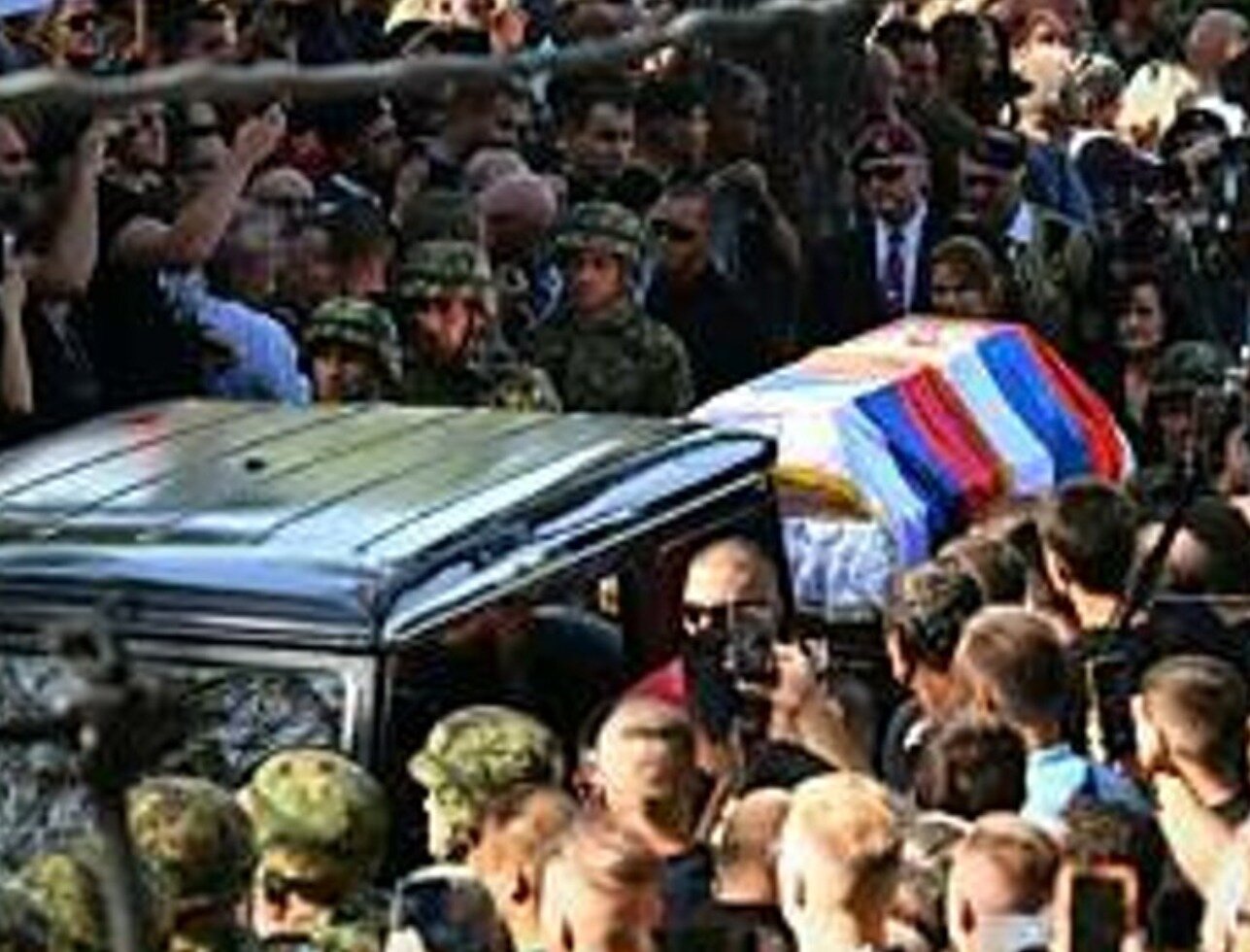
EU/ENG - The burial ceremony of Ratko Mladić, held in Belgrade on 7 September 2026 following his death on 27 August at the detention facilities in The Hague, offers a key focal point for analysing Serbia’s socio-political dynamics and its ongoing accession process towards European institutions.
The repatriation of the remains on 3 September 2026, alongside the subsequent funeral services at the Church of Saint Luke attended by senior local political and religious figures, underscores the persistence of narratives that diverge from the findings established by international justice. The sentence of life imprisonment for genocide and crimes against humanity, handed down by the International Criminal Tribunal for the former Yugoslavia and upheld in 2021, remains the definitive legal benchmark for European collective memory.
The position reiterated by European institutions stresses that accession to the European Union is not merely a technical process of regulatory and economic alignment, but a commitment rooted in shared, fundamental values: the primacy of international law, respect for victims of conflict, and a steadfast dedication to regional reconciliation and the rejection of nationalism.
“The images of Mladić’s funeral, held yesterday in Belgrade, came as a shock.” This was posted on social media, using the same text, by the President of the European Commission, Ursula von der Leyen, and the President of the European Council, António Costa.
Overcoming historical revisionism and ensuring full alignment with the principles of the rule of law remain essential steps for Serbia. While the consolidation of the European perspective for the Western Balkans remains a priority for regional stability, it demands a sustained commitment to building a shared and responsible historical memory.
European Political Unit @europolitiche.it*
*This text is an in-depth summary provided by our think tank and does not constitute a journalistic article.
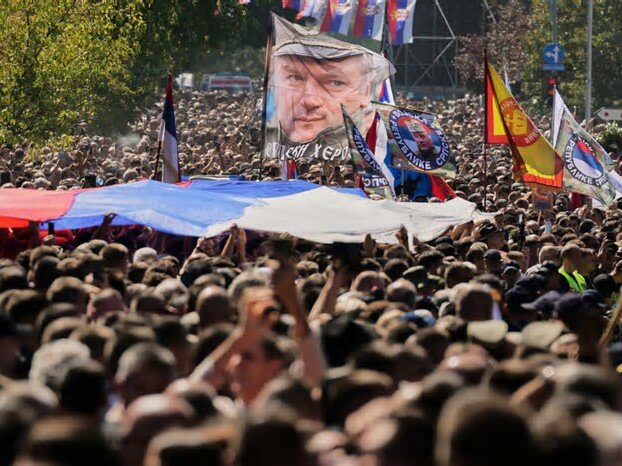
EU/FRA - La cérémonie d'inhumation de Ratko Mladić, qui s'est déroulée à Belgrade le 7 septembre 2026 à la suite de son décès survenu le 27 août au quartier pénitentiaire de La Haye, offre un éclairage significatif sur les dynamiques sociopolitiques de la Serbie et sur son processus d'approche des institutions communautaires.
Le rapatriement de la dépouille, effectué le 3 septembre 2026, ainsi que les obsèques célébrées en l'église Saint-Luc en présence de représentations institutionnelles et religieuses de premier plan, mettent en évidence la persistance de récits en décalage avec les conclusions de la justice internationale. La condamnation à la réclusion à perpétuité pour génocide et crimes contre l'humanité, prononcée par le Tribunal pénal international pour l'ex-Yougoslavie et confirmée en 2021, demeure le fondement juridique de référence pour la mémoire collective européenne.
La position rappelée à l'échelle européenne souligne que l'adhésion à l'Union européenne ne saurait se limiter à un exercice technique de conformité normative ou économique ; elle repose sur la pleine adhésion à des valeurs fondamentales : la primauté du droit international, le respect dû aux victimes des conflits et un engagement constant en faveur de la réconciliation régionale et du dépassement des nationalismes.
« Les images des obsèques de Mladić, qui se sont tenues hier à Belgrade, ont suscité un véritable choc. » C’est ce qu’ont publié sur les réseaux sociaux, dans un message identique, la présidente de la Commission européenne, Ursula von der Leyen, et le président du Conseil européen, António Costa.
Le dépassement du révisionnisme historique et l'alignement rigoureux sur les principes de l'État de droit constituent des étapes déterminantes pour la Serbie. Si la consolidation de la perspective européenne des Balkans occidentaux demeure une priorité pour la stabilité régionale, elle exige un engagement continu en faveur de l'édification d'une mémoire historique partagée et responsable.
European Political Unit @europolitiche.it*
*Ce texte est un résumé approfondi fourni par notre think tank et ne constitue pas un article journalistique.
EU/ITA - La cerimonia di sepoltura di Ratko Mladić, svoltasi a Belgrado il 7 settembre 2026 a seguito del decesso avvenuto il 27 agosto presso le strutture detentive dell'Aia, offre un rilevante elemento di analisi sulle dinamiche socio-politiche della Serbia e sul suo processo di avvicinamento alle istituzioni comunitarie.
Il rientro della salma in patria, avvenuto il 3 settembre 2026, e le successive esequie tenutesi presso la chiesa di San Luca alla presenza di figure apicali delle istituzioni locali e religiose, mettono in evidenza la persistenza di visioni difformi rispetto alle ricostruzioni maturate in sede di giustizia internazionale. La condanna all'ergastolo per genocidio e crimini contro l'umanità, pronunciata dal Tribunale Penale Internazionale per l'ex Jugoslavia e confermata nel 2021, costituisce il punto di riferimento giuridico per la memoria collettiva continentale.
L'orientamento espresso in sede europea ribadisce come l'adesione all'Unione Europea non sia un mero processo tecnico di adeguamento normativo o economico, bensì un percorso fondato sulla condivisione di valori imprescindibili: la centralità del diritto internazionale, il rispetto per le vittime dei conflitti e l'impegno costante verso la riconciliazione e il superamento dei nazionalismi.
“Le immagini del funerale di Mladic, tenutesi ieri a Belgrado, sono state uno shock”. Così hanno scritto, pubblicando lo stesso post sui social media, la presidente della Commissione europea von der Leyens ed il presidente del Consiglio europeo Costa.
Il superamento del revisionismo storico e l'allineamento ai principi dello Stato di diritto rappresentano per la Serbia passaggi centrali. Il consolidamento delle prospettive europee dei Balcani occidentali rimane prioritario per la stabilità regionale, ma richiede un impegno costante nella costruzione di una memoria comune e responsabile.
European Political Unit @europolitiche.it*
*Il presente testo è una sintesi di approfondimento del nostro think tank e non costituisce un articolo giornalistico