


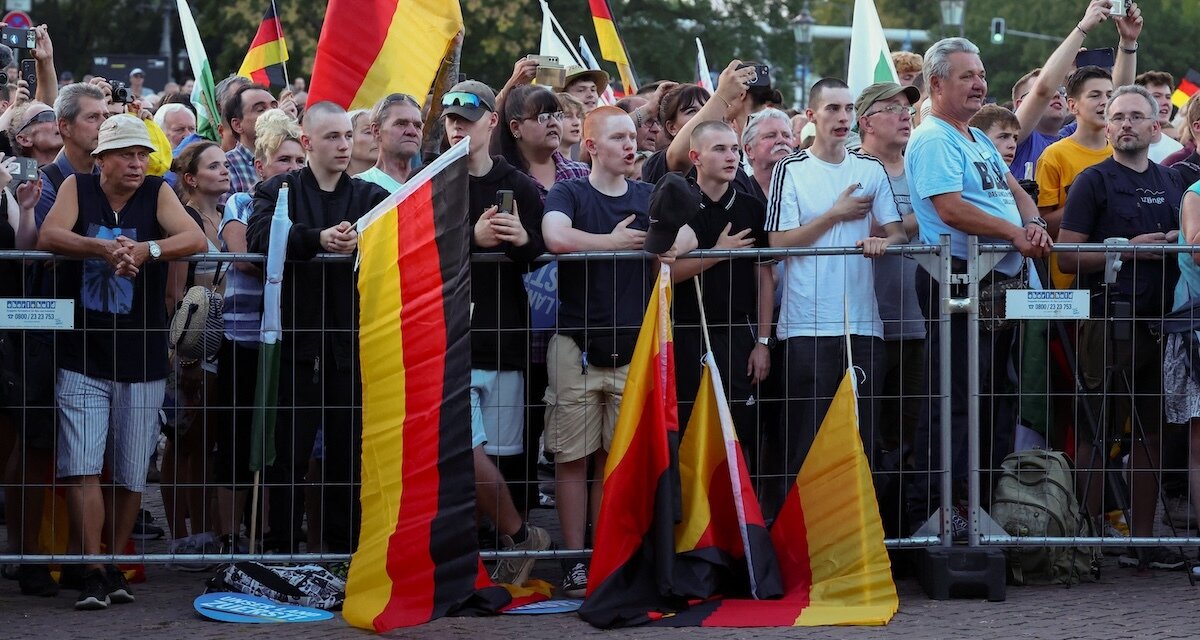
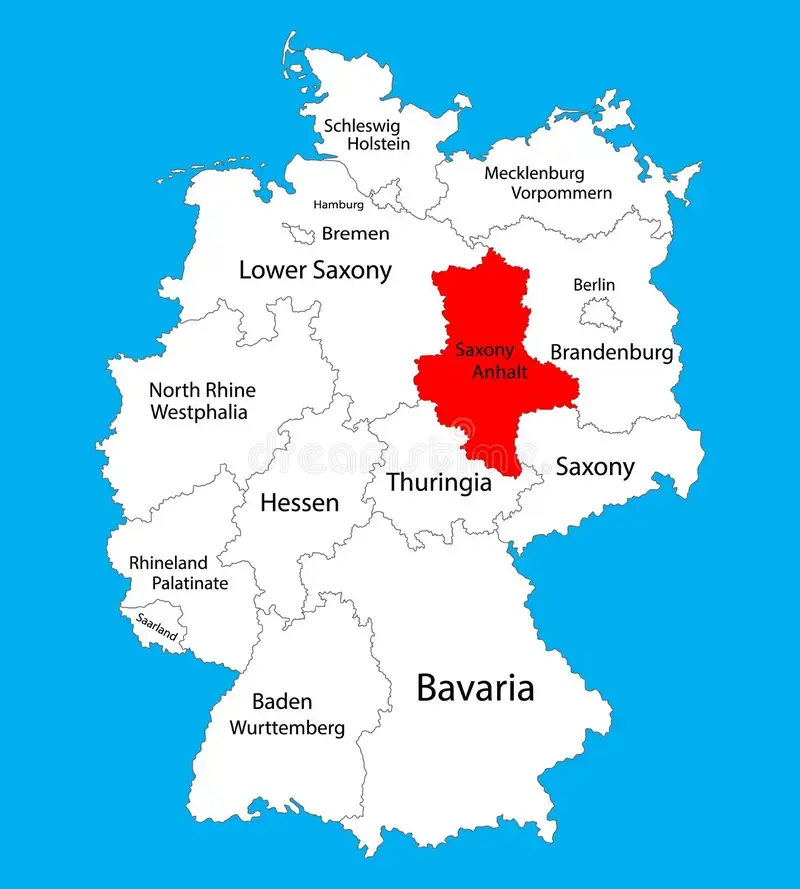
EU/ENG - The outcome of the September 6, 2026 electoral consultation in eastern Germany demands sober analytical reflection—free from alarmist catastrophism, yet vigilant regarding the institutional stability of the European polity. The decisive breakthrough of Alternative for Germany (AfD) in Saxony-Anhalt serves as yet another empirical confirmation of a socio-political cleavage that, more than three decades after the fall of the Berlin Wall, continues to fracture the polity of the Federal Republic. The party secured 43.8 percent of the popular vote. The Christian Democratic Union (CDU), previously the senior partner in the state-level governing coalition, plummeted to 17.1 percent, while the Social Democratic Party (SPD), Alliance 90/The Greens, and The Left each stagnated at roughly 9 percent of the vote share. The Sahra Wagenknecht Alliance (BSW) successfully cleared the five percent electoral threshold to enter the Landtag, whereas the Free Democratic Party (FDP) failed to cross it, thereby forfeiting its entire legislative representation. Established in 2013 on the initiative of academic economists and scholars opposed to the technocratic management of the eurozone sovereign debt crisis—with Bernd Lucke personifying its nascent phase—the AfD originated as a predominantly liberal-conservative formation. Over time, however, the party experienced a profound ideological realignment. The 2015 migration crisis catalyzed the exodus of its moderate faction and accelerated the institutional ascendancy of a nationalist wing. Under the current dual leadership of Tino Chrupalla and Alice Weidel, the party has consolidated a programmatic platform fiercely antagonistic toward federal migration frameworks, the European green transition, and the transatlantic security architecture, effectively weaponizing the structural anxieties inherent to the eastern federal states. Within regional contexts such as Saxony-Anhalt, this electoral consensus finds fertile ground in deeply entrenched demographic and economic asymmetries. Since the early 1990s, the persistent out-migration of younger cohorts and skilled human capital toward the western Länder has systematically depleted the local demographic baseline, exacerbating population aging and fostering a pervasive sense of territorial marginalization. Compounding this is an ongoing and structurally complex economic transition: although regional industrial and scientific centers of excellence do exist, the heavy reliance on small and medium-sized enterprises (SMEs) renders the regional economy acutely vulnerable to escalating energy inputs and the regulatory demands of decarbonization. This socio-economic landscape remains shadowed by the historical trauma of rapid post-reunification deindustrialization—a key variable fueling a structural disenchantment with the traditional governing parties of the establishment. Notwithstanding these sub-national dynamics, the overarching electoral topography of the Federal Republic reveals a pronounced spatial asymmetry. In the western Länder, which constitute the demographic and economic core of the nation, the electoral ceiling of the AfD remains rigidly circumscribed: support for the party seldom approaches twenty-five percent of the electorate, confining the formation to a distinct minority status within the western party system. The institutional robustness of the German constitutional order and the deeply entrenched pro-European orientation of the Federal Republic thus continue to provide a formidable systemic counterweight. Far from signaling an impending systemic collapse, the electoral phenomena observed in the eastern peripheries function as a pragmatic heuristic for the continent’s liberal democracies: European integration and cohesion are best safeguarded by actively mitigating the socio-economic externalities borne by territories most vulnerable to major structural transitions.
European Political Unit @europolitiche.it*
*This text is an in-depth summary provided by our think tank and does not constitute a journalistic article.
EU/FRA - Traduction en français politologique
L’ombre du malaise oriental et la résilience de l’architecture démocratique allemande Le résultat de la consultation électorale du 6 septembre 2026 dans l’Allemagne de l’Est impose une réflexion analytique rigoureuse, exempte de tout catastrophisme alarmiste tout en demeurant vigilante quant à la stabilité institutionnelle du système politique européen. La percée décisive de l’Alternative pour l’Allemagne (AfD) en Saxe-Anhalt confirme une fois de plus l’existence d’une clivage sociopolitique qui, plus de trente ans après la chute du Mur de Berlin, continue de fragmenter le corps électoral de la République fédérale. Le parti a recueilli 43,8 % des suffrages exprimés. L’Union chrétienne-démocrate (CDU), qui dirigeait l’exécutif régional sortant, a chuté à 17,1 %, tandis que le Parti social-démocrate (SPD), Alliance 90 / Les Verts et Die Linke stagnent chacun autour de 9 % des voix. L’Alliance Sahra Wagenknecht (BSW) a franchi avec succès le seuil électoral des cinq pour cent pour intégrer le Landtag, alors que le Parti libéral-démocrate (FDP) a échoué à le dépasser, perdant ainsi l’intégralité de sa représentation parlementaire. Fondée en 2013 à l’initiative d’économistes et d’universitaires opposés à la gestion technocratique de la crise de la dette souveraine dans la zone euro — avec Bernd Lucke personnifiant sa phase naissante —, l’AfD est à l’origine une formation à dominante libérale-conservatrice. Au fil du temps, cependant, le parti a connu un réalignement idéologique profond. La crise migratoire de 2015 a catalysé l’exode de sa faction modérée et accéléré l’ascension institutionnelle d’une aile nationaliste. Sous la double direction actuelle de Tino Chrupalla et d’Alice Weidel, le parti a consolidé une plate-forme programmatique farouchement antagoniste aux cadres fédéraux de la politique migratoire, à la transition écologique européenne et à l’architecture de sécurité transatlantique, instrumentalisant avec une efficacité redoutable les anxiétés structurelles inhérentes aux Länder orientaux. Dans des contextes régionaux tels que la Saxe-Anhalt, ce consensus électoral trouve un terrain fertile dans des asymétries démographiques et économiques profondément enracinées. Depuis le début des années 1990, l’exode persistant des jeunes cohortes et du capital humain qualifié vers les Länder occidentaux a systématiquement appauvri la base démographique locale, exacerbant le vieillissement de la population et alimentant un sentiment diffus de marginalisation territoriale. À cela s’ajoute une transition économique en cours et structurellement complexe : bien que des pôles industriels et scientifiques d’excellence régionale existent, la forte dépendance à l’égard des petites et moyennes entreprises (PME) rend l’économie régionale particulièrement vulnérable à l’escalade des coûts énergétiques et aux exigences réglementaires de la décarbonation. Ce paysage socio-économique demeure assombri par le traumatisme historique d’une désindustrialisation rapide post-réunification — une variable clé qui alimente un désenchantement structurel envers les partis de gouvernement traditionnels. Nonobstant ces dynamiques infrarégionales, la topographie électorale globale de la République fédérale révèle une asymétrie spatiale prononcée. Dans les Länder de l’Ouest, qui constituent le cœur démographique et économique de la nation, le plafond électoral de l’AfD demeure strictement circonscrit : le soutien au parti dépasse rarement vingt-cinq pour cent de l’électorat, confinant la formation à un statut minoritaire distinct au sein du système partisan occidental. La robustesse institutionnelle de l’ordre constitutionnel allemand et l’orientation pro-européenne profondément ancrée de la République fédérale continuent ainsi de fournir un contrepoids systémique formidable. Loin de signaler un effondrement systémique imminent, les phénomènes électoraux observés dans les périphéries orientales fonctionnent comme une heuristique pragmatique pour les démocraties libérales du continent : l’intégration et la cohésion européennes se trouvent mieux garanties par une atténuation active des externalités socio-économiques supportées par les territoires les plus vulnérables face aux grandes transitions structurelles.
European Political Unit @europolitiche.it*
*Ce texte est un résumé approfondi fourni par notre think tank et ne constitue pas un article journalistique.
EU/ITA - L'ombra del malessere orientale e la tenuta dell'architettura democratica tedesca
Il risultato delle urne nella Germania orientale del 6 settembre 2026 impone una riflessione sobria, priva di allarmismi catastrofisti ma vigile sulla tenuta delle istituzioni europee. La forte affermazione di Alternative für Deutschland in Sassonia- Anhalt rappresenta l'ennesima conferma di un divario socio-politico che, a oltre trentacinque anni dalla caduta del Muro, continua a solcare il cuore della Repubblica Federale. L'AfD ha ottenuto il 43,8% dei voti. L'Unione Cristiano_Democratica (CDU), che era al governo dello stato è al 17,1%, mentre il Partito Socialdemocratico (SPD), Alleanza 90/Verdi e Die Linke hanno ottenuto circa il 9% dei voti ciascuno. L'Alleanza Sahra Wagenknecht (BSW) ha oltrepassato la soglia del 5% per entrare nel Landtag, mentre il Partito Liberale Democratico (FDP), non riuscendovi, ha perso tutta la sua rappresentanza.
Nata nel 2013 su iniziativa di economisti e accademici contrari alla gestione della crisi dell'eurozona – con la figura di Bernd Lucke a incarnarne la prima fase – AfD era originariamente una formazione di stampo prevalentemente liberale e conservatore. Nel tempo, tuttavia, la traiettoria del partito si è evoluta in modo profondo. La crisi migratoria del 2015 ha segnato l'uscita dell'ala moderata e la progressiva ascesa di una componente orientata su istanze nazionaliste. Sotto l'attuale guida di Tino Chrupalla e Alice Weidel, la formazione ha consolidato una linea fortemente critica verso le politiche migratorie, la transizione ecologica europea e l'assetto di sicurezza transatlantico, intercettando con particolare efficacia le inquietudini del contesto orientale.
Proprio in regioni come la Sassonia-Anhalt, questo consenso trova terreno fertile in dinamiche demografiche ed economiche stratificate. Dagli anni Novanta, un'emigrazione costante di giovani e profili qualificati verso i Land dell'Ovest ha progressivamente impoverito il tessuto demografico locale, accentuando l'invecchiamento della popolazione e alimentando un senso diffuso di marginalizzazione. A ciò si aggiunge una transizione economica ancora complessa: sebbene non manchino poli d'eccellenza industriale e scientifica, la prevalenza di piccole e medie imprese rende il territorio particolarmente sensibile all'aumento dei costi energetici e alle sfide della riconversione verde. È un panorama su cui pesa ancora il ricordo sociale della rapida deindustrializzazione seguita alla riunificazione, fattore che alimenta un disincanto strutturale verso i partiti tradizionali di governo.
Ciò nonostante, il quadro politico della Germania nel suo complesso mostra una chiara asimmetria. Nei territori occidentali, che rappresentano il vero baricentro demografico ed economico della nazione, la presa di AfD trova limiti precisi: in quelle regioni il consenso del partito raramente si avvicina a un quarto degli elettori, mantenendo la formazione su posizioni minoritarie.
La solidità delle istituzioni tedesche e il profondo radicamento europeista della Repubblica Federale continuano così a garantire, per ora, un solido contrappeso. Più che l'annuncio di una frattura sistemica, la dinamica osservata nelle regioni orientali rappresenta per le democrazie del continente un monito alla concretezza: la coesione europea si difende accompagnando con cura i territori più esposti ai costi delle grandi transizioni sociali ed economiche.
European Political Unit @europolitiche.it*
*Il presente testo è una sintesi di approfondimento del nostro think tank e non costituisce un articolo giornalistico