


EU/ENG - Berlin, the three-year mark of Kai Wegner: the architecture of an administrative compromise
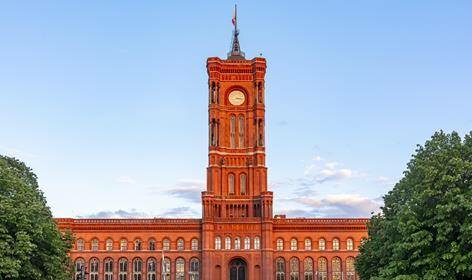
Three years into his tenure at the helm of the Rotes Rathaus (Red City Hall) (in the photo below), Kai Wegner’s administration warrants an assessment that transcends party affiliations, focusing instead on the operational viability of a hybrid governance model. Elected by the Berlin House of Representatives on April 27, 2023—the formal outcome of a process stemming from the repeated election of February 12 of the same year, which marked the end of the previous coalition—Wegner has stabilized a management style based on an alliance between the CDU and the SPD. In a metropolitan context historically oriented toward the center-left, the current administration has distinguished itself through a pragmatism that, despite being led by a conservative, has found in its social-democratic partner a structural element of mitigation and bureaucratic continuity.
The SPD as a stabilizing variable: a narrative of governance
Looking at the work of these past three years, it is evident that the SPD has acted not merely as a minor partner, but as the true pivot of administrative stability. Within the halls of the Rotes Rathaus, the dialectic between the CDU’s conservative pragmatism and the social-democratic style of governance has given rise to a political framework built on continuous adjustments and silent mediation.
It is in this liminal and constant space that the game of governability has been played. On housing, for example, a precise institutional choreography emerged: while the Christian Democrats pushed to accelerate the dynamism of the private market, the SPD responded by drawing a line of social protection, preventing the rhetoric of efficiency from overwhelming the hubs of urban welfare. Concurrently, facing an restless and stratified metropolis, the social democrats proved able to interpret the most progressive demands, acting as "shock absorbers" whenever the temptation of a security-focused shift threatened to overheat the civil climate. The social-democratic component thus presided over technical ministries with a bureaucratic meticulousness that transformed the Mayor’s political ambitions into applicable administrative decisions, preventing the complexity of the Berlin machine from stalling in conflict. Ultimately, the SPD has successfully carved out a role as guarantor, transforming what might have appeared as a coalition of convenience into a governing architecture capable of metabolizing ideological differences.
Balance of an institutional arrangement: between rigor and mediation
Thirty-six months into the mandate, the CDU-SPD coalition stands as an exercise in political realism. Wegner has leveraged the SPD’s deep knowledge of Berlin’s mechanisms, while the latter has found within the governing perimeter a space to exert a moderating influence on the Mayor's choices.
The three-year period has not produced a radical transformation of the city’s identity, but it has consolidated a management style that prioritizes technical efficiency over polarization. If the success of a mayoralty is measured by the stability of institutional structures, the current path seems to confirm the validity of this compromise: in this duo, Berlin has found a form of government capable of negotiating its internal complexity, maintaining an equilibrium of stability that, while not free from criticism, has avoided conflictual drifts.
European Unit @europolitiche.it*
*Institutional analysis note – This text is an in-depth synthesis from our think tank and does not constitute a journalistic article.
EU/GER - Die dreijährige Amtszeit von Kai Wegner: Die Architektur eines administrativen Kompromisses
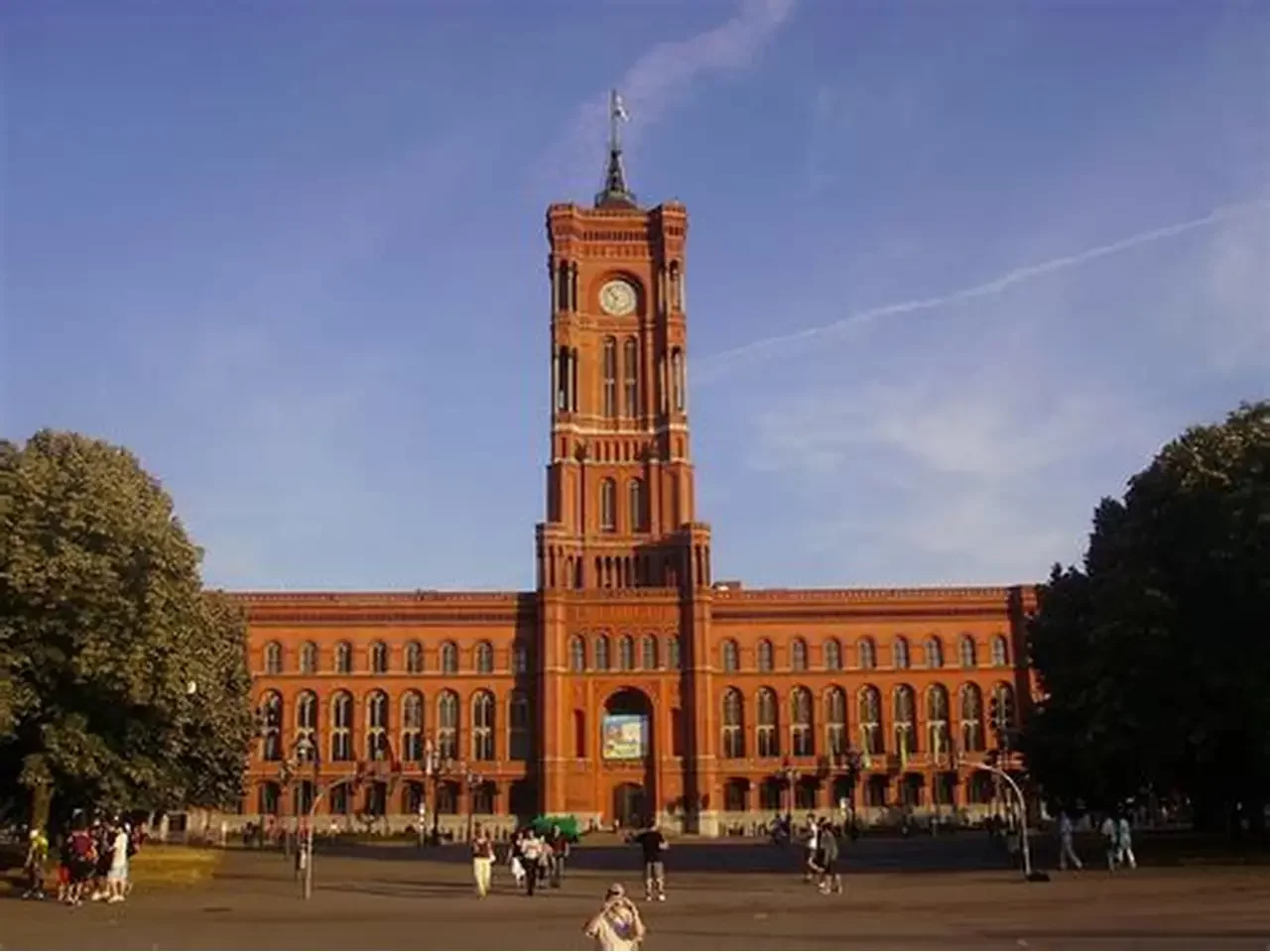
Drei Jahre nach seinem Amtsantritt an der Spitze des Roten Rathauses (auf dem Foto oben) bedarf die Verwaltung von Kai Wegner einer Bewertung, die über Parteizugehörigkeiten hinausgeht und sich auf die operative Stabilität eines hybriden Regierungsmodells konzentriert. Wegner, der am 27. April 2023 vom Berliner Abgeordnetenhaus gewählt wurde – ein formales Ergebnis des Prozesses, der aus der Wiederholungswahl vom 12. Februar desselben Jahres hervorging und das Ende der vorherigen Koalition besiegelte –, hat eine Führung auf Basis eines Bündnisses zwischen CDU und SPD stabilisiert. In einem großstädtischen Kontext, der historisch eher dem Mitte-Links-Spektrum zugeneigt ist, zeichnet sich die aktuelle Regierung durch einen Pragmatismus aus, der unter konservativer Führung im sozialdemokratischen Partner ein strukturelles Element der Mäßigung und bürokratischen Kontinuität gefunden hat.
Die SPD als Stabilisierungsvariable: Eine Governance-Erzählung
Betrachtet man das Wirken dieser drei Jahre, so zeigt sich, dass die SPD nicht etwa als Juniorpartner, sondern als der wahre Dreh- und Angelpunkt der administrativen Stabilität agiert hat. In den Räumen des Roten Rathauses hat die Dialektik zwischen dem konservativen Pragmatismus der CDU und der sozialdemokratischen Regierungskultur ein politisches Gefüge hervorgebracht, das auf ständigen Anpassungen und stillem Interessenausgleich beruht.
In diesem liminalen und konstanten Raum wurde das Spiel der Regierbarkeit entschieden. In der Wohnungsbaufrage etwa entwickelte sich eine präzise institutionelle Choreografie: Während die christdemokratische Seite auf eine Dynamisierung des privaten Marktes drängte, zog die SPD eine rote Linie zum sozialen Schutz und verhinderte, dass die Rhetorik der Effizienz die Grundpfeiler der urbanen Wohlfahrt überrollte. Parallel dazu, angesichts einer unruhigen und vielschichtigen Metropole, verstanden es die Sozialdemokraten, die progressiveren Forderungen zu artikulieren und als "Stoßdämpfer" zu fungieren, wann immer die Versuchung eines sicherheitspolitischen Kurswechsels das gesellschaftliche Klima zu überhitzen drohte. Die sozialdemokratische Komponente hat so die Fachministerien mit einer bürokratischen Akribie geleitet, die die politischen Ambitionen des Regierenden Bürgermeisters in umsetzbare Verwaltungsentscheidungen transformierte und verhinderte, dass sich die Berliner Verwaltungsmaschine im Konflikt festfährt. Letztlich hat es die SPD verstanden, sich als Garantin zu positionieren und das, was als Zweckbündnis hätte erscheinen können, in eine Regierungsarchitektur zu verwandeln, die in der Lage ist, ideologische Differenzen zu verarbeiten.
Bilanz einer institutionellen Ordnung: Zwischen Strenge und Ausgleich
36 Monate nach Beginn der Amtszeit stellt sich die CDU-SPD-Koalition als eine Übung in politischem Realismus dar. Wegner hat von der tiefgreifenden Kenntnis der Berliner Mechanismen profitiert, über die die SPD verfügt, während letztere im Regierungsrahmen einen Raum gefunden hat, um mäßigenden Einfluss auf die Entscheidungen des Bürgermeisters auszuüben.
Die drei Jahre haben keine radikale Transformation der städtischen Identität bewirkt, aber eine Form der Verwaltung gefestigt, die technische Effizienz gegenüber Polarisierung priorisiert. Wenn der Erfolg einer Amtszeit an der Stabilität der institutionellen Strukturen gemessen wird, scheint der aktuelle Weg die Gültigkeit dieses Kompromisses zu bestätigen: Berlin hat in diesem Bündnis eine Regierungsform gefunden, die fähig ist, ihre interne Komplexität auszuhandeln und ein Stabilitätsgleichgewicht zu wahren, das, wenn auch nicht frei von Kritik, destruktive Konfliktlinien vermieden hat.
European Unit @europolitiche.it*
*Anmerkung zur institutionellen Analyse – Dieser Text ist eine vertiefende Zusammenfassung unseres Think Tanks und stellt keinen journalistischen Artikel dar.

EU/ITA - A poco più di tre anni dall'insediamento, l'amministrazione di Kai Wegner alla guida della Rotes Rathaus si presta a una valutazione che trascende le appartenenze partitiche, concentrandosi sulla tenuta operativa di un modello di governo ibrido. Eletto dal Parlamento di Berlino il 27 aprile 2023 — esito formale di un processo scaturito dalla ripetizione elettorale del 12 febbraio dello stesso anno, che ha sancito il superamento della precedente coalizione — Wegner ha stabilizzato una gestione basata su un’alleanza tra CDU e SPD. In un contesto metropolitano storicamente orientato al centrosinistra, l'attuale giunta si è distinta per un pragmatismo che, pur sotto una guida conservatrice, ha trovato nel partner socialdemocratico un elemento strutturale di mitigazione e continuità burocratica.
L’SPD come variabile di stabilizzazione: una narrazione della governance
Guardando all'operato di questo triennio, si osserva come l’SPD abbia agito non tanto come un comprimario, quanto come il vero perno della tenuta amministrativa. All'interno delle stanze della Rotes Rathaus, la dialettica tra il pragmatismo conservatore della CDU e la cultura di governo socialdemocratica ha dato vita a una trama politica fatta di aggiustamenti continui e mediazioni silenziose.
È in questo spazio, liminale e costante, che si è giocata la partita della governabilità. Sulla questione abitativa, per esempio, è emersa una coreografia istituzionale ben precisa: mentre la spinta democristiana premeva per accelerare il dinamismo del mercato privato, l'SPD rispondeva tracciando una linea di tutela sociale, impedendo che la retorica dell'efficienza travolgesse i presidi di welfare urbano. Parallelamente, di fronte a una metropoli inquieta e stratificata, i socialdemocratici hanno saputo farsi interpreti delle istanze più progressiste, agendo come "ammortizzatori" ogni qualvolta la tentazione di una sterzata securitaria rischiava di surriscaldare il clima civile. La componente socialdemocratica ha così presidiato i ministeri tecnici con una meticolosità burocratica che ha trasformato le ambizioni politiche del borgomastro in decisioni amministrative applicabili, evitando che la complessità della macchina berlinese si incagliasse nel conflitto. In definitiva, l'SPD ha saputo ritagliarsi un ruolo di garante, trasformando quella che poteva apparire come un’alleanza d'occasione in una architettura di governo capace di metabolizzare le divergenze ideologiche.
Bilancio di un assetto istituzionale: tra rigore e mediazione
A trentasei mesi dall'inizio del mandato, la coalizione CDU-SPD si configura come un esercizio di realismo politico. Wegner ha tratto vantaggio dalla conoscenza capillare dei meccanismi berlinesi detenuta dall'SPD, mentre quest'ultima ha trovato nel perimetro governativo uno spazio per esercitare un'influenza moderatrice sulle scelte del sindaco.
Il triennio non ha prodotto una trasformazione radicale dell'identità cittadina, ma ha consolidato una modalità di gestione che privilegia l'efficienza tecnica rispetto alla polarizzazione. Se il successo di una sindacatura si misura sulla stabilità degli assetti istituzionali, il percorso attuale sembra confermare la validità di questo compromesso: Berlino ha trovato, in questo binomio, una forma di governo capace di negoziare la propria complessità interna, mantenendo un equilibrio di stabilità che, pur non esente da criticità, ha evitato derive di natura conflittuale.
European Unit @europolitiche.it*
*Nota di analisi istituzionale – Il presente testo è una sintesi di approfondimento del nostro think tank e non costituisce un articolo giornalistico.