




EU/ENG - Exactly twelve months ago, on March 12, 2023, at the "La Nuvola" convention center in Rome, Elly Schlein was officially proclaimed Secretary of the Democratic Party (PD). That day in 2023 marked the dawn of a transformative phase, not only for the party itself but for the entire Italian center-left, effectively drawing a line under the uncertainty that followed the electoral defeat of 2022.
A Mandate Defined by Discontinuity
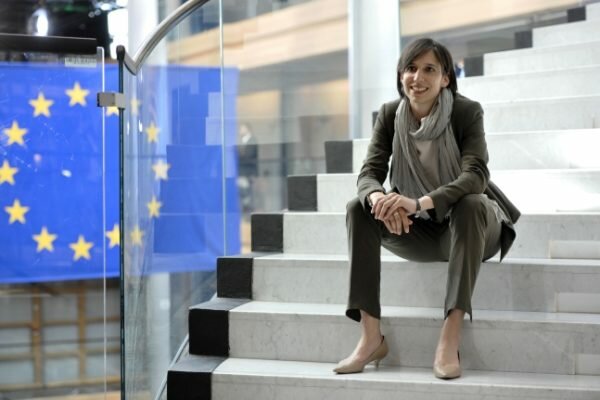
Writing as of March 12, 2024, it is undeniable that Schlein’s first year at the helm has been defined by a resolute break with the past. The Secretary has steered the PD toward a clear-cut agenda, prioritizing issues such as the minimum wage, the mitigation of social inequalities, climate action, and the advancement of civil rights. These causes have always been cornerstones of Schlein’s political career, having been prominently championed throughout her term as an MEP between 2014 and 2019 (see photo below).
Her commitment to a robust, uncompromising opposition to the Meloni government has succeeded in re-engaging segments of the electorate that had grown alienated from the Nazareno—the party’s headquarters—often perceiving the PD as being too detached from genuinely progressive ideals.
The Nuances of a Complex Tenure
The assessment of this inaugural year naturally presents a complex picture. While Schlein has demonstrably sustained internal mobilization and galvanized a new cohort of younger voters, the challenge of maintaining party cohesion remains persistent. The Secretary has had to navigate the intricate internal dynamics of the party, skillfully managing different factions to prevent internal friction from paralyzing the broader political mission.
Furthermore, her relationship with other opposition forces remains fluid. The pursuit of a structured alliance—capable of positioning the PD as a credible pole of attraction for the Five Star Movement and centrist entities—is a work in progress. It is a landscape where local electoral successes occasionally contrast with the enduring difficulty of aligning on a cohesive national strategic agenda.
Looking Toward Future Milestones
As the party marks this first anniversary, Schlein’s leadership enters a phase of greater political maturity. Her success in focusing the party’s consensus on pillars such as public healthcare and education—central themes during her tours across the country—evinces a capacity for listening that the PD has successfully translated into tangible policy proposals.
Nonetheless, the year ahead will prove decisive. The ultimate litmus test for Schlein’s leadership will be her ability to translate this newfound vitality into a comprehensive governance project capable of appealing to a broader electorate, reaching beyond the traditional confines of the center-left. After twelve months, the PD under Schlein has certainly rediscovered its voice; the next challenge is to prove, both in substance and at the ballot box, that it can represent a viable alternative government for the nation.
European Unit @europolitiche.it*
*This text is a think tank note and is not a journalistic article.
EU/ITA - Esattamente dodici mesi fa, il 12 marzo, all’interno del centro congressi “La Nuvola” di Roma, Elly Schlein veniva proclamata segretaria del Partito Democratico. Quella giornata del 2023 segnò l'inizio di una fase nuova, non solo per il partito, ma per l'intero centrosinistra italiano, ponendo fine a un lungo periodo di incertezza seguito alla sconfitta elettorale del 2022.
Una segreteria segnata dalla discontinuità
Siamo al 12 marzo del 2024 e possiamo senza smentite scrivere che il primo anno di guida Schlein è stato caratterizzato da una precisa volontà di rottura rispetto al passato. La segretaria ha impresso al PD un’agenda fortemente orientata ai temi che considera prioritari: la difesa del salario minimo, la lotta alle disuguaglianze sociali, il contrasto al cambiamento climatico e il sostegno ai diritti civili. Sono temi cari a Schlein da sempre, particolarmente affrontati anche nella sua esperienza dal 2014 al 2019 da europarlamentare (nella foto in alto la segretaria all'epoca).
La scelta di marcare una linea di netta opposizione al governo Meloni ha ricompattato parte dell'elettorato che, negli anni scorsi, si era allontanato dal Nazareno, percependo il PD come troppo distante dalle istanze più progressiste.
Luci di un percorso complesso
Il bilancio di questo primo anno presenta, naturalmente, aspetti eterogenei. Se da un lato Schlein è riuscita a mantenere alta la mobilitazione interna e a catalizzare l’interesse di una nuova fascia di giovani elettori, dall’altro rimane aperta la sfida della coesione. La segretaria ha dovuto misurarsi con la necessità di mediare tra le diverse anime del partito, evitando che le tensioni interne paralizzassero l’azione politica.
Inoltre, il rapporto con le altre forze dell’opposizione è rimasto un terreno fluido. La ricerca di un’alleanza strutturata – capace di trasformare il PD in un polo di attrazione per il Movimento 5 Stelle e le altre forze centriste – è ancora un cantiere aperto, dove i successi elettorali locali si alternano a difficoltà di dialogo su temi strategici nazionali.
Verso le prossime tappe
Con la celebrazione del primo anniversario, la segreteria Schlein entra in una fase di maggiore maturità politica. Il successo ottenuto nel far convergere il consenso del partito su temi come la sanità pubblica e la scuola – diventati cavalli di battaglia del suo tour nei territori – dimostra una capacità di ascolto che il PD ha saputo trasformare in proposta politica.
Tuttavia, il prossimo anno sarà decisivo. La vera prova per la leadership di Schlein sarà riuscire a trasformare questa ritrovata vitalità in un progetto di governo capace di parlare a un elettorato più vasto, andando oltre il perimetro tradizionale del centrosinistra. Dopo dodici mesi, il PD di Schlein è un partito che ha ritrovato una voce, ma che ora è chiamato a dimostrare, nei fatti e nei numeri, di poter rappresentare una reale alternativa di governo per il Paese.
European Unit @europolitiche.it*
*This text is a think tank note and is not a journalistic article.