


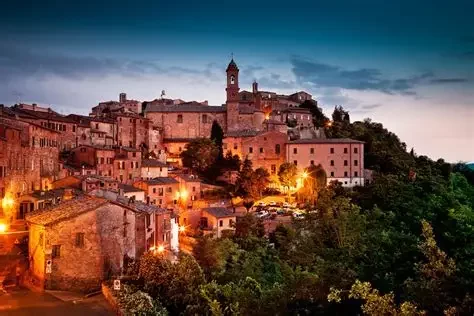
EU/ENG - There is a different atmosphere at this year’s Fortezza in Montepulciano. Amid the pavilions of Luci sul Lavoro—a festival where the future of employment is typically discussed through the clinical languages of consensus, enterprise, and statistics—there is a room where the air feels suddenly charged. It is the hall hosting an initiative promoted by the Giuseppe Di Vittorio Foundation, in close synergy with CGIL Toscana and IRES Toscana. Here, the theme "Between Integration and Cooperation: What Future for the European Union?" is not a ceremonial formula, but a challenge launched into the heart of the continental debate.
Proceedings were opened by Gianfranco Francese, representing CGIL Toscana. His opening remarks went well beyond mere institutional formality; he emphasized how crucial it is for a region like Tuscany not to passively endure the fallout of EU policies, but to actively participate in shaping them. His words paved the way for Francesco Sinopoli, President of the Di Vittorio Foundation, who coordinated the day’s proceedings. Sinopoli did not adopt the posture of an academic moderator; his stance was that of a man intent on carving out a new path. Drawing upon a tradition of social constitutionalism, Sinopoli challenged the audience: Europe cannot be reduced to a technocratic "cage"; it must return to being a "constitutional organ" capable of guaranteeing dignity and sovereignty to the working classes.
The keynote guest, Wolfgang Streeck, took the stage with the composure of one who has nothing left to prove. The Director Emeritus of the Max Planck Institute spoke with the precision of a surgeon. His thesis, explored under the title "From Integration to Cooperation," struck at the very heart of the European dogma: he argued that the obsession with integration at any cost has effectively hollowed out the power of national democracies. His proposal—to slow down, so as to salvage democratic substance through cooperation—served as a salutary provocation in a room accustomed to viewing Europe as an inevitable destiny.
Across the table, Marco Buti listened and responded with the poise of one who has navigated the institutional architecture of Brussels from the inside. The economist from the European University Institute did not shy away from the confrontation, but grounded it in the realm of the possible. His defense was that of a man who believes the European machine must be repaired while in motion, not dismantled, as it remains the only framework capable of engaging with global giants. It was a debate between divergent worldviews, where technical expertise engaged with and acknowledged the political exigency with seriousness and autonomy.
The discussion was further enriched by the sociological perspectives of Mimmo Carrieri and Teresa Pullano. Carrieri examined the "shattered" state of labor, questioning how collective identity can survive in a European market seemingly designed to atomize workers. Pullano introduced the lens of identity and citizenship; with her, the symposium descended into the concrete reality of gender disparities and social fractures that EU policies have often ended up crystallizing rather than dismantling.
What resonated throughout this day in Montepulciano was not consensus, but a fertile tension. There were those, like Streeck, pointing toward the exit from the dogma; those, like Buti, seeking to secure the windows of the common house; and those, like Sinopoli, seeking to break down the walls to bring labor back into the room where decisions are made.
There were no hollow proclamations, but a lucid awakening: the European Union has reached a historical turning point. The challenge that emerged within the walls of the Fortezza, thanks to the synergistic efforts of the Di Vittorio Foundation and its Tuscan partners, is whether we are capable of building a Europe that is not merely a reflection of financial interests, but the stage for a new, necessary, and legitimate conflict. While the sun of Montepulciano beats down on Tuscany outside, inside the hall there remains the sense that, after this July 11th, the debate on the European future throughout the summer of 2024 will be enriched by the exchanges of this day. In this workshop of ideas, the Giuseppe Di Vittorio Foundation has reaffirmed its mission: to serve as one of those vital think tanks of that 'intellectual resistance' which, alone, can continue to give meaning to a Europe of the citizens.
Associated correspondents @europolitiche.it*
*This text is a think tank note and is not a journalistic article
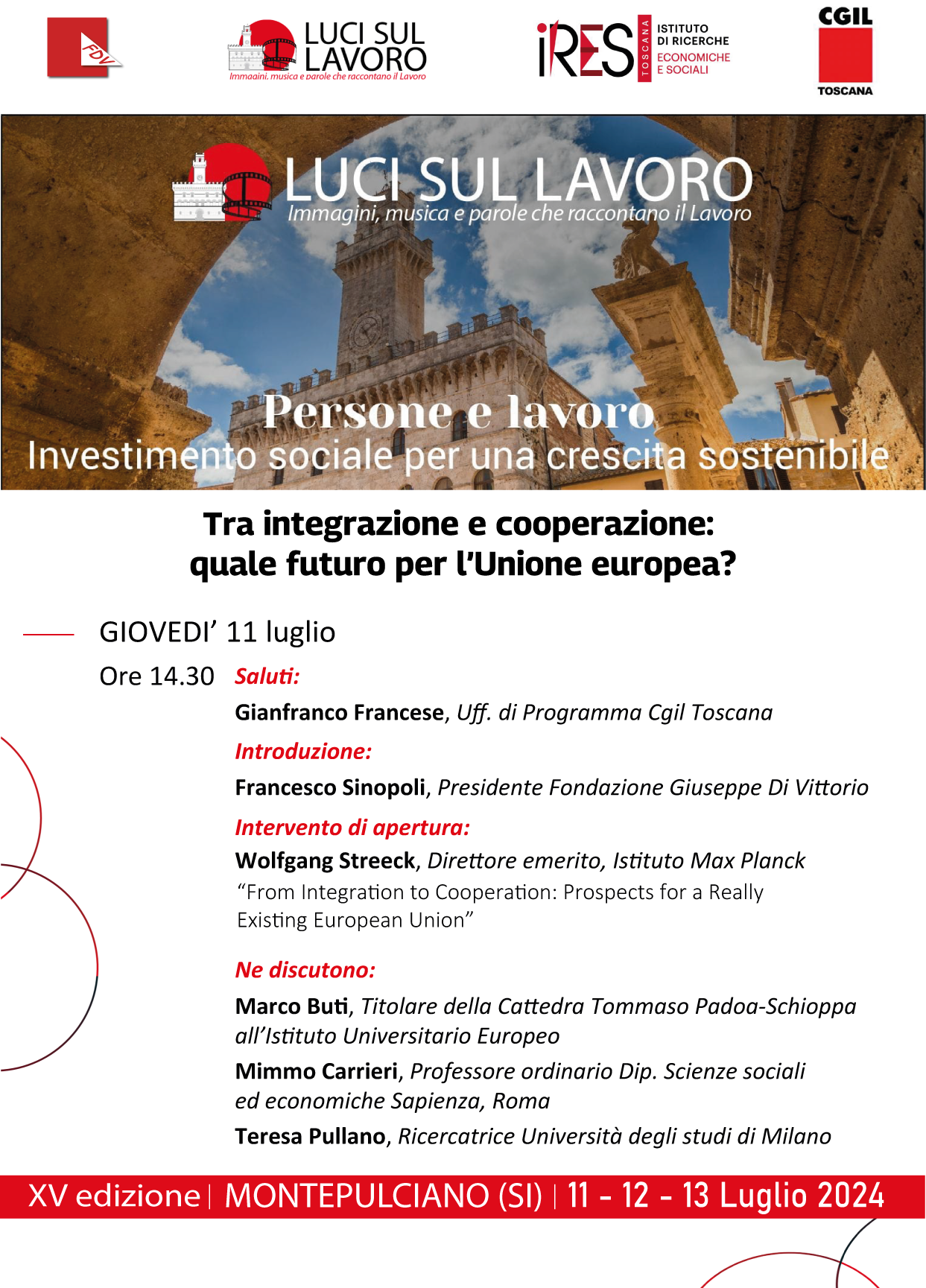
EU/ITA - C’è un’aria diversa, in questa edizione della Fortezza di Montepulciano. Tra i padiglioni di Luci sul Lavoro, dove solitamente si declina il futuro occupazionale attraverso i linguaggi della concertazione e delle statistiche, c’è una stanza dove il clima si fa improvvisamente più denso. È la sala che ospita l'iniziativa voluta dalla Fondazione Giuseppe Di Vittorio, in stretta sinergia con CGIL Toscana e IRES Toscana. Qui, il tema "Tra integrazione e cooperazione: quale futuro per l’Unione Europea?" non è una formula cerimoniale, ma una sfida lanciata nel cuore del dibattito continentale.
A dare il via ai lavori è Gianfranco Francese, in rappresentanza della CGIL Toscana. Il suo saluto istituzionale non è un semplice adempimento formale: nel suo intervento, Francese sottolinea quanto sia cruciale, per un territorio come quello toscano, non subire passivamente le ricadute delle politiche comunitarie, ma partecipare attivamente alla loro costruzione. Le sue parole aprono lo spazio a Francesco Sinopoli, Presidente della Fondazione Di Vittorio, che coordina la giornata. Sinopoli non veste i panni del moderatore accademico; la sua postura è quella di chi intende tracciare un solco netto. Richiamando la lezione del costituzionalismo sociale italiano in proiezione europea, Sinopoli incalza la platea: l'Unione non può ridursi a una "gabbia" tecnocratica; deve tornare a essere un "organo costituzionale" capace di garantire dignità e sovranità alle classi lavoratrici.
L’ospite d’onore, Wolfgang Streeck, arriva in scena con la pacatezza di chi non ha più nulla da dimostrare. Il direttore emerito del Max Planck Institute si muove con la precisione del chirurgo. La sua tesi, esposta nel titolo "From Integration to Cooperation", è un affondo preciso al dogma europeo: sostiene che l’ossessione per l'integrazione a ogni costo ha finito per svuotare di potere le democrazie nazionali. La sua proposta — rallentare per salvare la sostanza democratica attraverso la cooperazione — suona come una provocazione salutare in una sala abituata a vedere l'Europa come un destino ineluttabile.
Dall'altra parte del tavolo, Marco Buti ascolta e risponde con la postura di chi ha vissuto l'architettura istituzionale di Bruxelles dall'interno. L'economista dell'Istituto Universitario Europeo non si sottrae al confronto, ma lo riporta sul terreno del riformismo possibile. La sua difesa è quella di chi sostiene che la macchina europea va riparata in corsa, non smontata, perché è l'unico perimetro in grado di misurarsi con i giganti globali. È un dibattito tra visioni del mondo, dove la competenza tecnica dialoga e raccoglie con serietà e autonomia l'istanza politica.
Ad arricchire il quadro, portando la discussione sulle sponde della sociologia, ci sono Mimmo Carrieri e Teresa Pullano. Carrieri osserva il lavoro "in frantumi", interrogandosi su come un’identità collettiva possa sopravvivere in un mercato europeo che sembra progettato per atomizzare i lavoratori. Pullano, invece, introduce la lente dell'identità e della cittadinanza: con lei, il convegno scende nel concreto delle disparità di genere e delle fratture sociali che, spesso, le politiche europee hanno finito per cristallizzare anziché abbattere.
Quello che si respira in questa giornata a Montepulciano non è il consenso, ma una tensione fertile. C’è chi, come Streeck, indica la porta d'uscita dal dogma; chi, come Buti, cerca di blindare le finestre della casa comune; e chi, come Sinopoli, vuole sfondare le pareti per far rientrare il lavoro nella stanza dei bottoni.
Non ci sono stati proclami, ma una lucida presa di coscienza: l'Unione Europea è arrivata a un tornante della storia. La sfida, emersa tra le mura della Fortezza grazie all'impegno sinergico della Fondazione Di Vittorio e dei partner toscani, è se saremo capaci di costruire un'Europa che non sia solo il riflesso degli interessi finanziari, ma il teatro di un nuovo, necessario, conflitto legittimo. Mentre fuori il sole di Montepulciano batte sulla Toscana, dentro la sala resta la sensazione che, dopo questo 11 luglio, la discussione sul futuro europeo di questa estate del 2024 sarà arricchito dal confronto di questa giornata. La Fondazione Di Vittorio, in questo cantiere di idee, ha confermato la sua missione: essere uno di quei pensatoi nevralgici di quella "resistenza intellettuale" che, sola, può continuare a dar senso all'Europa dei cittadini.
inviati associati @europolitiche.it*
*This text is a think tank note and is not a journalistic article - Questo testo è una nota del think tank e non è un articolo giornalistico