


EU/ENG - With the political demise of Viktor Orbán, defeated in Sunday’s general election on April 12, the European Union has not merely lost its premier enfant terrible; it has effectively neutralised the weapon of the veto that for years held the continent’s grand reforms hostage. A period of unprecedented operational efficiency now beckons.
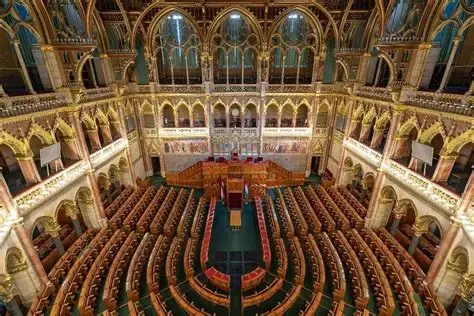
For over a decade, the European Council has resembled a theatre of the absurd. As history accelerated—buffeted by pandemics, energy crises, and the return of warfare to the continent’s fringes—the decision-making processes governing 450 million citizens were systematically paralysed by the recalcitrance of a single man. Today, with the changing of the guard in Budapest, that era of political blackmail appears finally to have reached its twilight. (Pictured below: The Hungarian Parliament)
The Veto as a Weapon of Mass Distraction
Mr Orbán masterfully transformed the principle of unanimity—originally conceived to safeguard national sovereignty—into an instrument of political extortion. From his opposition to military aid for Ukraine and the boycotting of the Global Minimum Tax, to the obstruction of the new Pact on Migration, the Hungarian veto became the exorbitant price Europe paid to maintain a facade of unity.
Every Brussels summit degenerated into exhausting horse-trading: the release of pandemic recovery funds bartered for a green light on vital geopolitical dossiers. This corrosive dynamic has long undermined the credibility of European institutions, both on the global stage and in the eyes of their own electorates.
A New Horizon for Tomorrow’s Europe
The emerging leadership of Péter Magyar has already signalled a radical departure from the past. The hope among European partners is not for a compliant Hungary, but for a constructive one. The dismantling of the Budapest blockade promises to unblock three fundamental pillars.
Stripped of systematic obstructionism regarding support for Kyiv and sanctions against Moscow, the EU can finally speak with a singular, coherent voice, projecting the true weight of a geopolitical bloc. Furthermore, resolving the protracted disputes under Article 7 would bring the era of "special surveillance" to a close, normalising financial flows and ensuring the communal budget is never again taken hostage. Finally, Mr Orbán’s exit removes the primary psychological and political hurdle to transitioning towards qualified majority voting in foreign policy and taxation—a prerequisite if the Union is to successfully integrate new members from the Western Balkans and Ukraine.
Towards a Union of 27, Not 26+1
Paradoxically, the conclusion of the Orbán era marks Hungary’s return to full European sovereignty. It signals the rebirth of a nation that no longer merely resides within the Union to extract financial dividends, but actively participates in its architecture.
"The power of the veto is the power of those who have run out of arguments," was a frequent whisper in the corridors of the Justus Lipsius building.
Today, Europe discovers it has plenty of arguments left. The removal of the Hungarian handbrake is more than a diplomatic triumph; it is the essential condition for the European project to transition from crisis management to long-term strategic planning. If 2026 indeed marks the demise of "vetocracy," then the march towards a more federal Union—less beholden to individual egotism—has officially resumed.
Associated analysts @europolitiche.it*
*This text is a think tank note and is not a journalistic article.
EU/ITA - Con l’uscita di scena di Viktor Orbán, sconfitto alle elezioni politiche di domenica 12 aprile, l’Unione Europea non perde solo il suo principale "enfant terrible", ma neutralizza l’arma del veto che per anni ha tenuto in ostaggio le grandi riforme continentali. Si apre una stagione di operatività senza precedenti.
Per oltre un decennio, il Consiglio Europeo è somigliato a un teatro dell’assurdo. Mentre la storia accelerava — tra pandemie, crisi energetiche e il ritorno della guerra ai confini dell’Unione — i processi decisionali di 450 milioni di cittadini venivano sistematicamente paralizzati dal "no" di un solo uomo. Oggi, con il cambio della guardia a Budapest, quella stagione di ricatti politici sembra finalmente giunta al capolinea (Nella foto in alto il Parlamento ungherese).
Il veto come arma di distrazione di massa
Viktor Orbán ha trasformato il principio di unanimità, nato per tutelare le sovranità nazionali, in uno strumento di estorsione politica. Dall’opposizione agli aiuti militari per l’Ucraina al boicottaggio della Global Minimum Tax, passando per il blocco del nuovo Patto sulla Migrazione, il veto ungherese è stato il prezzo che l’Europa ha dovuto pagare per mantenere un’apparente unità. Ogni vertice a Bruxelles si trasformava in un estenuante mercanteggiamento: i fondi del PNRR contro il via libera a dossier vitali. Una dinamica che ha logorato la credibilità delle istituzioni europee agli occhi del mondo e dei suoi stessi cittadini.
Cosa cambia per l’Europa di domani
La nuova leadership di Péter Magyar ha già inviato segnali di discontinuità radicale. La speranza dei partner europei non è quella di un’Ungheria "accondiscendente", ma di un’Ungheria costruttiva. La fine del muro di Budapest promette di sbloccare tre pilastri fondamentali:
Politica Estera e Sicurezza: Senza l’ostruzionismo sistematico sul sostegno a Kyiv e sulle sanzioni a Mosca, l’UE può finalmente parlare con una voce sola, proiettando la forza di un vero blocco geopolitico.
Stato di Diritto e Bilancio: La risoluzione delle controversie sull'articolo 7 permetterebbe di chiudere la stagione della "vigilanza speciale", normalizzando i flussi finanziari e garantendo che il bilancio comunitario non sia più usato come ostaggio.
Riforma dei Trattati: La caduta di Orbán rimuove il principale ostacolo psicologico e politico alla transizione verso il voto a maggioranza qualificata anche in politica estera e fiscale, un passo necessario per l'integrazione di nuovi membri (Balcani Occidentali e Ucraina).
Verso un’Unione a 27, non 26+1.
La fine dell'era Orbán significa, paradossalmente, il ritorno dell'Ungheria alla piena sovranità europea. Un Paese che non si limita a "stare" nell'Unione per incassare dividendi, ma che partecipa alla sua costruzione.
"Il potere del veto è il potere di chi non ha argomenti", si sussurrava spesso nei corridoi del Justus Lipsius.
Oggi l'Europa scopre di avere di nuovo molti argomenti. La rimozione del freno a mano ungherese non è solo un successo diplomatico, è la condizione necessaria affinché il progetto europeo possa passare dalla gestione delle crisi alla pianificazione del futuro. Se il 2026 segna la fine della "vetocrazia", allora il cammino verso un'Unione più federale e meno ostaggio dei singoli egoismi è ufficialmente ripartito.
Analisti associati @europolitiche.it*
*This contribution is an analytical brief and not a journalistic article - Questo contributo è un brief analitico del think tank e non è un articolo giornalistico